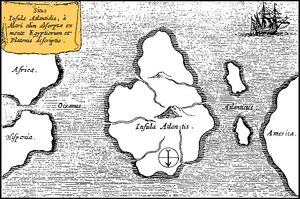
Atlantis (Ancient Greek: Ἀτλαντὶς νῆσος, "island of Atlas") is a fictional island mentioned within an allegory on the hubris of nations in Plato's works Timaeus and Critias, where it represents the antagonist naval power that besieges "Ancient Athens", the pseudo-historic embodiment of Plato's ideal state in The Republic.
Despite its minor importance in Plato's work, the Atlantis story has had a considerable impact on literature. The allegorical aspect of Atlantis was taken up in utopian works of several Renaissance writers, such as Francis Bacon's New Atlantis and Thomas More's Utopia. On the other hand, nineteenth-century amateur scholars misinterpreted Plato's narrative as historical tradition, most notably in Ignatius L. Donnelly's Atlantis: The Antediluvian World. Plato's vague indications of the time of the events—more than 9,000 years before his time—and the alleged location of Atlantis—"beyond the Pillars of Hercules"—has led to much pseudoscientific speculation. As a consequence, Atlantis has become a byword for any and all supposed advanced prehistoric lost civilizations and continues to inspire contemporary fiction, from comic books to films.