


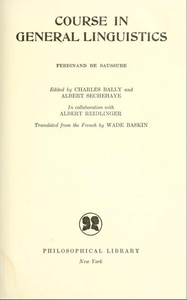
| Editor | Charles Bally, Albert Sechehaye |
| Associate Editor | Albert Reidlinger |
| Translated by | Wade Baskin |
| Publisher | Philosophical Library |
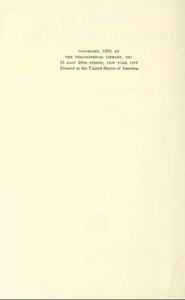
| Copyright Holder | The Philosophical Library, Inc. |
| Format | Hardback |
| Language | English |
| Location | New York |
| Copyright | 1959 |
| Pages / Font | 240 pages |
| Chapters | Translator's Introduction
Preface to the First Edition
INTRODUCTION
I. A Glance at the History of Linguistics
II. Subject Matter and Scope of Linguistics; Its Relations with Other Sciences
III. Object of Linguistics
-- 1. Definition of Language
-- 2. Place of Language in the Facts of Speech
-- 3. Place of Language in Human Facts; Semiology
IV. Linguistics of Language and Linguistics of Speaking
V. Internal and External Elements of Language
VI. Graphic Representation of Language
-- 1. Need for Studying the Subject
-- 2. Influence of Writing; Reason for Its Ascendancy over the Spoken Form
-- 3. Systems of Writing
-- 4. Reasons for the Discrepancy between Writing and Pronunciation
-- 5. Results of the Discrepancy
VII. Phonology
-- 1. Definition
-- 2. Phonological Writing
-- 3. Validity of Evidence Furnished by Writing
APPENDIX: PRINCIPLES OF PHONOLOGY
I. Phonological Species
-- 1. Definition of the Phoneme
-- 2. The Vocal Apparatus and its Functioning
-- 3. Classification of Sounds According to Their Oral Articulation
II. Phonemes in the Spoken Chain
-- 1. Need for Studying Sounds in the Spoken Chain
-- 2. Implosion and Explosion
-- 3. Different Combinations of Explosions and Implosions in the Chain
-- 4. Syllabic Boundary and Vocalic Peak
-- 5. Criticism of Theories of Syllabication
-- 6. Length of Implosion and Explosion
-- 7. Phonemes of Aperture 4; Diphthongs; Questions about Transcription
-- Editor's Note
PART ONE: GENERAL PRINCIPLES
I. Nature of the Linguistic Sign
-- 1. Sign, Signified, Signifier
-- 2. Principle I: The Arbitrary Nature of the Sign
-- 3. Principle II: The Linear Nature of the Signifier
II. Immutability and Mutability of the Sign
-- 1. Immutability
-- 2. Mutability
III. Static and Evolutionary Linguistics
-- 1. Inner Duality of All Sciences Concerned with Values
-- 2. Inner Duality and the History of Linguistics
-- 3. Inner Duality Illustrated by Examples
-- 4. The Difference between the Two Classes Illustrated by Comparisons
-- 5. The Two Linguistics Contrasted According to Their Methods and Principles
-- 6. Synchronic Law and Diachronic Law
-- 7. Is There a Panchronic Viewpoint?
-- 8. Consequences of the Confusing of Synchrony and Diachrony
-- 9. Conclusions
PART TWO: SYNCHRONIC LINGUISTICS
I. Generalities
II. The Concrete Entities of Language
-- 1. Definition of Entity and Unit
-- 2. Method of Delimitation
-- 3. Practical Difficulties of Delimitation
-- 4. Conclusion
III. Identities, Realities, Values
IV. Linguistic Value
-- 1. Language as Organized Thought Coupled with Sound
-- 2. Linguistic Value from a Conceptual Viewpoint
-- 3. Linguistic Value from a Material Viewpoint
-- 4. The Sign Considered in Its Totality
V. Syntagmatic and Associative Relations
-- 1. Definitions
-- 2. Syntagmatic Relations
-- 3. Associative Relations
VI. Mechanism of Language
-- 1. Syntagmatic Solidarities
-- 2. Simultaneous Functioning of the Two Types of Groupings
-- 3. Absolute and Relative Arbitrariness
VII. Grammar and Its Subdivisions
-- 1. Definitions: Traditional Divisions
-- 2. Rational Divisions
VIII. Role of Abstract Entities in Grammar
PART THREE: DIACHRONIC LINGUISTICS
I. Generalities
II. Phonetic Changes
-- 1. Their Absolute Regularity
-- 2. Conditioned Phonetic Changes
-- 3. Points on Method
-- 4. Causes of Phonetic Changes
-- 5. The Effect of Phonetic Changes Is Unlimited
III. Grammatical Consequences of Phonetic Evolution
-- 1. Breaking of the Grammatical Bond
-- 2. Effacement of the Structure of Words
-- 3. There are No Phonetic Doublets
-- 4. Alternation
-- 5. Laws of Alternation
-- 6. Alternation and Grammatical Bond
IV. Analogy
-- 1. Definition and Examples
-- 2. Analogical Phenomena Are Not Changes
-- 3. Analogy as a Creative Force in Language
V. Analogy and Evolution
-- 1. How an Analogical Innovation Enters Language
-- 2. Analogical Innovations as Symptoms of Changes in Interpretation
-- 3. Analogy as a Renovating and Conservative Force
VI. Folk Etymology
VII. Agglutination
-- 1. Definition
-- 2. Agglutination and Analogy
VIII. Diachronic Units, Identities, and Realities
Appendices to Parts Three and Four
-- 1. Subjective and Objective Analysis
-- 2. Subjective Analysis and the Defining of Subunits
-- 3. Etymology
PART FOUR: GEOGRAPHICAL LINGUISTICS
I. Concerning the Diversity of Languages
II. Complications of Geographical Diversity
-- 1. Coexistence of Several Languages at the Same Point
-- 2. Literary Language and Local Idiom
III. Causes of Geographical Diversity
-- 1. Time, the Basic Cause
-- 2. Effect of Time on Continuous Territory
-- 3. Dialects Have No Natural Boundaries
-- 4. Languages Have No Natural Boundaries
IV. Spread of Linguistic Waves
-- 1. Intercourse and Provincialism
-- 2. The Two Forces Reduced to One
-- 3. Linguistic Differentiation on Separate Territories
PART FIVE: CONCERNING RETROSPECTIVE LINGUISTICS
I. The Two Perspectives of Diachronic Linguistics
II. The Oldest Language and the Prototype
III. Reconstructions
-- 1. Their Nature and Aim
-- 2. Relative Accuracy of Reconstructions
IV. The Contribution of Language to Anthropology and Prehistory
-- 1. Language and Race
-- 2. Ethnic Unity
-- 3. Linguistic Paleontology
-- 4. Linguistic Type and Mind of the Social Group
V. Language Families and Linguistic Types
Index Translator's Introduction
Preface to the First Edition
INTRODUCTION
I. A Glance at the History of Linguistics
II. Subject Matter and Scope of Linguistics; Its Relations with Other Sciences
III. Object of Linguistics
-- 1. Definition of Language
-- 2. Place of Language in the Facts of Speech
-- 3. Place of Language in Human Facts; Semiology
IV. Linguistics of Language and Linguistics of Speaking
V. Internal and External Elements of Language
VI. Graphic Representation of Language
-- 1. Need for Studying the Subject
-- 2. Influence of Writing; Reason for Its Ascendancy over the Spoken Form
-- 3. Systems of Writing
-- 4. Reasons for the Discrepancy between Writing and Pronunciation
-- 5. Results of the Discrepancy
VII. Phonology
-- 1. Definition
-- 2. Phonological Writing
-- 3. Validity of Evidence Furnished by Writing
APPENDIX: PRINCIPLES OF PHONOLOGY
I. Phonological Species
-- 1. Definition of the Phoneme
-- 2. The Vocal Apparatus and its Functioning
-- 3. Classification of Sounds According to Their Oral Articulation
II. Phonemes in the Spoken Chain
-- 1. Need for Studying Sounds in the Spoken Chain
-- 2. Implosion and Explosion
-- 3. Different Combinations of Explosions and Implosions in the Chain
-- 4. Syllabic Boundary and Vocalic Peak
-- 5. Criticism of Theories of Syllabication
-- 6. Length of Implosion and Explosion
-- 7. Phonemes of Aperture 4; Diphthongs; Questions about Transcription
-- Editor's Note
PART ONE: GENERAL PRINCIPLES
I. Nature of the Linguistic Sign
-- 1. Sign, Signified, Signifier
-- 2. Principle I: The Arbitrary Nature of the Sign
-- 3. Principle II: The Linear Nature of the Signifier
II. Immutability and Mutability of the Sign
-- 1. Immutability
-- 2. Mutability
III. Static and Evolutionary Linguistics
-- 1. Inner Duality of All Sciences Concerned with Values
-- 2. Inner Duality and the History of Linguistics
-- 3. Inner Duality Illustrated by Examples
-- 4. The Difference between the Two Classes Illustrated by Comparisons
-- 5. The Two Linguistics Contrasted According to Their Methods and Principles
-- 6. Synchronic Law and Diachronic Law
-- 7. Is There a Panchronic Viewpoint?
-- 8. Consequences of the Confusing of Synchrony and Diachrony
-- 9. Conclusions
PART TWO: SYNCHRONIC LINGUISTICS
I. Generalities
II. The Concrete Entities of Language
-- 1. Definition of Entity and Unit
-- 2. Method of Delimitation
-- 3. Practical Difficulties of Delimitation
-- 4. Conclusion
III. Identities, Realities, Values
IV. Linguistic Value
-- 1. Language as Organized Thought Coupled with Sound
-- 2. Linguistic Value from a Conceptual Viewpoint
-- 3. Linguistic Value from a Material Viewpoint
-- 4. The Sign Considered in Its Totality
V. Syntagmatic and Associative Relations
-- 1. Definitions
-- 2. Syntagmatic Relations
-- 3. Associative Relations
VI. Mechanism of Language
-- 1. Syntagmatic Solidarities
-- 2. Simultaneous Functioning of the Two Types of Groupings
-- 3. Absolute and Relative Arbitrariness
VII. Grammar and Its Subdivisions
-- 1. Definitions: Traditional Divisions
-- 2. Rational Divisions
VIII. Role of Abstract Entities in Grammar
PART THREE: DIACHRONIC LINGUISTICS
I. Generalities
II. Phonetic Changes
-- 1. Their Absolute Regularity
-- 2. Conditioned Phonetic Changes
-- 3. Points on Method
-- 4. Causes of Phonetic Changes
-- 5. The Effect of Phonetic Changes Is Unlimited
III. Grammatical Consequences of Phonetic Evolution
-- 1. Breaking of the Grammatical Bond
-- 2. Effacement of the Structure of Words
-- 3. There are No Phonetic Doublets
-- 4. Alternation
-- 5. Laws of Alternation
-- 6. Alternation and Grammatical Bond
IV. Analogy
-- 1. Definition and Examples
-- 2. Analogical Phenomena Are Not Changes
-- 3. Analogy as a Creative Force in Language
V. Analogy and Evolution
-- 1. How an Analogical Innovation Enters Language
-- 2. Analogical Innovations as Symptoms of Changes in Interpretation
-- 3. Analogy as a Renovating and Conservative Force
VI. Folk Etymology
VII. Agglutination
-- 1. Definition
-- 2. Agglutination and Analogy
VIII. Diachronic Units, Identities, and Realities
Appendices to Parts Three and Four
-- 1. Subjective and Objective Analysis
-- 2. Subjective Analysis and the Defining of Subunits
-- 3. Etymology
PART FOUR: GEOGRAPHICAL LINGUISTICS
I. Concerning the Diversity of Languages
II. Complications of Geographical Diversity
-- 1. Coexistence of Several Languages at the Same Point
-- 2. Literary Language and Local Idiom
III. Causes of Geographical Diversity
-- 1. Time, the Basic Cause
-- 2. Effect of Time on Continuous Territory
-- 3. Dialects Have No Natural Boundaries
-- 4. Languages Have No Natural Boundaries
IV. Spread of Linguistic Waves
-- 1. Intercourse and Provincialism
-- 2. The Two Forces Reduced to One
-- 3. Linguistic Differentiation on Separate Territories
PART FIVE: CONCERNING RETROSPECTIVE LINGUISTICS
I. The Two Perspectives of Diachronic Linguistics
II. The Oldest Language and the Prototype
III. Reconstructions
-- 1. Their Nature and Aim
-- 2. Relative Accuracy of Reconstructions
IV. The Contribution of Language to Anthropology and Prehistory
-- 1. Language and Race
-- 2. Ethnic Unity
-- 3. Linguistic Paleontology
-- 4. Linguistic Type and Mind of the Social Group
V. Language Families and Linguistic Types
Index Show all ▾ |
| Notes | Printed in the United States of America |
Added by auboisdormant