

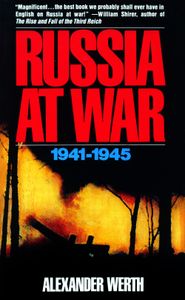
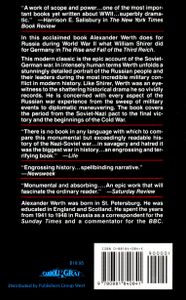
| Copyright Holder | Alexander Werth |
| Publisher | Carroll & Graf Publishers, Inc. |
| Reprinted with/by arrangement with | E. P. Dutton & Co., Inc. |
| About/Subject | World War II, World War II: Eastern Front, Russia |
| Format | Mass-Market Paperback |
| Language | English |
| Location | New York |
| Copyright | 1964 |
| This Edition Published | 1984 |
| This Impression | 1996 |
| Pages / Font | 1100 pages |
| Impression/Printing No. | 5 |
| ISBN | 0-88184-084-X |
| Barcode (EAN) | 9 780881 840841 |
| Barcode | 90000> |
| Price | $18.95 |
| Chapters | Foreword
Introduction
PART ONE. PRELUDE TO WAR
I. Russia’s 1939 Dilemma
II. The Soviet-German Pact
III. The Partition of Poland
IV. From the Finnish War to the German Invasion of France
V. Russia and the Fall of France—Baltic States and Bessarabia
VI. Russia and the Battle of Britain: a Psychological Turning-Point?
VII. Display of Russian Military Might—Molotov’s Tragi-comic Visit to Berlin
VIII. “1941—it will be a Happy Year”
IX. The Last Weeks of Peace
PART TWO. FROM THE INVASION TO THE BATTLE OF MOSCOW
I. Soviet Unpreparedness in June 1941
II. The Invasion
III. Molotov and Stalin Speak
IV. Smolensk: the First Check to the Blitzkrieg
V. Close-Up One: Moscow at the Beginning of the War
VI. Close-Up Two: Autumn Journey to the Smolensk Front
VII. Advance on Leningrad
VIII. Rout in the Ukraine: “Khrushchev versus Stalin”
IX. The Evacuation of Industry
X. Battle of Moscow Begins—The October 16 Panic
XI. Battle of Moscow II—Stalin’s Holy Russia Speech
XII. The Moscow Counter-Offensive
XIII. The Diplomatic Scene of the First Months of the Invasion
PART THREE. THE LENINGRAD STORY
I. The Dead of Leningrad
II. The Enemy Advances
III. Three Million Trapped
IV. The Ladoga Lifeline
V. The Great Famine
VI. The Ice Road
VII. Leningrad Close-Up
VIII. Why Leningrad “Took It”
IX. A Note on Finland
PART FOUR. THE BLACK SUMMER OF 1942
I. Close-Up: Moscow in June 1942
II. The Anglo-Soviet Alliance
III. Three Russian Defeats: Kerch, Kharkov and Sebastopol
IV. The Renewal of the German Advance
V. Patrie-en-Danger and the Post-Rostov Reforms
VI. Stalin Ropes in the Church
PART FIVE. STALINGRAD
I. Stalingrad: the Chuikov Story
II. The “Stalingrad” months in Moscow—the Churchill visit and after
III. Russians encircle the Germans at Stalingrad
IV. Stalingrad Close-Ups.
• I: The Stalingrad Lifeline
• II: The Scene of the Manstein Rout
V. Stalingrad: the Agony
VI. Close-Up: Stalingrad at the Time of the Capitulation
VII. “Caucasus Round Trip”
PART SIX. 1943: YEAR OF HARD VICTORIES—THE POLISH TANGLE
I. After Stalingrad—The Birth of “Stalin’s Military Genius”
II. The Germans and the Ukraine
III. Kharkov under the Germans
IV. The Economic Effort of 1942–3—the Red Army’s New Look—Lend-Lease
V. Before the Spring Lull of 1943—Stalin’s Warning—The Germans’ “Desert Policy”
VI. The Technique of Building a New Poland
VII. The Dissolution of the Comintern and Other Curious Events in the Spring of 1943
VIII. Kursk: Hitler Loses His Last Chance of Turning the Tide
IX. Orel: Close-Up of a Purely Russian City under the Germans
X. A Short Chapter on a Vast Subject: German Crimes in the Soviet Union
XI. The Partisans in the Soviet-German War
XII. Paradoxes of Soviet Foreign Policy in 1943—The Fall of Mussolini—The “Free German Committee”
XIII. Stalin’s Little Nationalist Orgy after Kursk
XIV. The Spirit of Teheran
PART SEVEN. 1944: RUSSIA ENTERS EASTERN EUROPE
I. Some Characteristics of 1944
II. Close-Up I: Ukrainian Microcosm
III. Close-Up II: Odessa, Capital of Rumanian Transniestria
IV. Close-Up III: Hitler’s Crimean Catastrophe
V. The Lull Before D-Day—Stalin’s Flirtation with the Catholic Church—“Slav Unity”
VI. The Russians and the Normandy Landing
VII. German Rout in Belorussia: “Worse than Stalingrad”
VIII. What Happened at Warsaw?
IX. Close-Up: Lublin—the Maidanek Murder Camp
X. Rumania, Finland and Bulgaria Pack Up
XI. Churchill’s Second Moscow Visit
XII. Stalin’s Horse-Trading with de Gaulle
XIII. Alternative Policies and Ideologies towards the End of the War
PART EIGHT. VICTORY—AND THE SEEDS OF THE COLD WAR
I. Into Germany
II. Yalta and After
III. June, 1945: Berlin Under the Russians Only
IV. The Three Months’ Peace
V. Potsdam
VI. The Short Russo-Japanese War—Hiroshima
Selected Bibliography
Chronological Table
Acknowledgements Foreword
Introduction
PART ONE. PRELUDE TO WAR
I. Russia’s 1939 Dilemma
II. The Soviet-German Pact
III. The Partition of Poland
IV. From the Finnish War to the German Invasion of France
V. Russia and the Fall of France—Baltic States and Bessarabia
VI. Russia and the Battle of Britain: a Psychological Turning-Point?
VII. Display of Russian Military Might—Molotov’s Tragi-comic Visit to Berlin
VIII. “1941—it will be a Happy Year”
IX. The Last Weeks of Peace
PART TWO. FROM THE INVASION TO THE BATTLE OF MOSCOW
I. Soviet Unpreparedness in June 1941
II. The Invasion
III. Molotov and Stalin Speak
IV. Smolensk: the First Check to the Blitzkrieg
V. Close-Up One: Moscow at the Beginning of the War
VI. Close-Up Two: Autumn Journey to the Smolensk Front
VII. Advance on Leningrad
VIII. Rout in the Ukraine: “Khrushchev versus Stalin”
IX. The Evacuation of Industry
X. Battle of Moscow Begins—The October 16 Panic
XI. Battle of Moscow II—Stalin’s Holy Russia Speech
XII. The Moscow Counter-Offensive
XIII. The Diplomatic Scene of the First Months of the Invasion
PART THREE. THE LENINGRAD STORY
I. The Dead of Leningrad
II. The Enemy Advances
III. Three Million Trapped
IV. The Ladoga Lifeline
V. The Great Famine
VI. The Ice Road
VII. Leningrad Close-Up
VIII. Why Leningrad “Took It”
IX. A Note on Finland
PART FOUR. THE BLACK SUMMER OF 1942
I. Close-Up: Moscow in June 1942
II. The Anglo-Soviet Alliance
III. Three Russian Defeats: Kerch, Kharkov and Sebastopol
IV. The Renewal of the German Advance
V. Patrie-en-Danger and the Post-Rostov Reforms
VI. Stalin Ropes in the Church
PART FIVE. STALINGRAD
I. Stalingrad: the Chuikov Story
II. The “Stalingrad” months in Moscow—the Churchill visit and after
III. Russians encircle the Germans at Stalingrad
IV. Stalingrad Close-Ups.
• I: The Stalingrad Lifeline
• II: The Scene of the Manstein Rout
V. Stalingrad: the Agony
VI. Close-Up: Stalingrad at the Time of the Capitulation
VII. “Caucasus Round Trip”
PART SIX. 1943: YEAR OF HARD VICTORIES—THE POLISH TANGLE
I. After Stalingrad—The Birth of “Stalin’s Military Genius”
II. The Germans and the Ukraine
III. Kharkov under the Germans
IV. The Economic Effort of 1942–3—the Red Army’s New Look—Lend-Lease
V. Before the Spring Lull of 1943—Stalin’s Warning—The Germans’ “Desert Policy”
VI. The Technique of Building a New Poland
VII. The Dissolution of the Comintern and Other Curious Events in the Spring of 1943
VIII. Kursk: Hitler Loses His Last Chance of Turning the Tide
IX. Orel: Close-Up of a Purely Russian City under the Germans
X. A Short Chapter on a Vast Subject: German Crimes in the Soviet Union
XI. The Partisans in the Soviet-German War
XII. Paradoxes of Soviet Foreign Policy in 1943—The Fall of Mussolini—The “Free German Committee”
XIII. Stalin’s Little Nationalist Orgy after Kursk
XIV. The Spirit of Teheran
PART SEVEN. 1944: RUSSIA ENTERS EASTERN EUROPE
I. Some Characteristics of 1944
II. Close-Up I: Ukrainian Microcosm
III. Close-Up II: Odessa, Capital of Rumanian Transniestria
IV. Close-Up III: Hitler’s Crimean Catastrophe
V. The Lull Before D-Day—Stalin’s Flirtation with the Catholic Church—“Slav Unity”
VI. The Russians and the Normandy Landing
VII. German Rout in Belorussia: “Worse than Stalingrad”
VIII. What Happened at Warsaw?
IX. Close-Up: Lublin—the Maidanek Murder Camp
X. Rumania, Finland and Bulgaria Pack Up
XI. Churchill’s Second Moscow Visit
XII. Stalin’s Horse-Trading with de Gaulle
XIII. Alternative Policies and Ideologies towards the End of the War
PART EIGHT. VICTORY—AND THE SEEDS OF THE COLD WAR
I. Into Germany
II. Yalta and After
III. June, 1945: Berlin Under the Russians Only
IV. The Three Months’ Peace
V. Potsdam
VI. The Short Russo-Japanese War—Hiroshima
Selected Bibliography
Chronological Table
Acknowledgements Show all ▾ |