

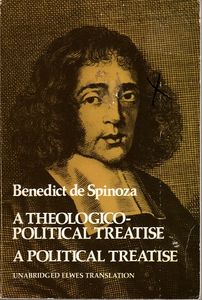
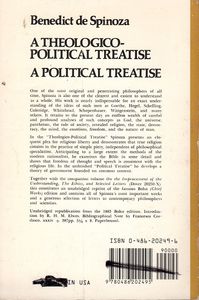
A Theologico-Political Treatise & A Political Treatise
| Format | Trade Paperback |
| Language | English |
| Copyright | 1951 |
| Notes by | Francesco Cordasco |
| Translated by | R.H.M. Elwes |
| Publisher | Dover Publications, Inc. |
| Format | Trade Paperback |
| Language | English |
| Location | Mineola, New York |
| Copyright | 1951 |
| Pages / Font | 387 pages |
| ISBN 10 | 0-486-20249-6 |
| Barcode (EAN) | 9 780486 202495 |
| Chapters | Introduction
Theologico-Political Treatise
1) Preface
2) Chapter One - Of Prophecy
3) Chapter Two - Of Prophets
4) Chapter Three - Of the Vocation of the Hebrews, and whether the Gift of Prophecy was peculiar to them
5) Chapter Four - Of the Divine Law
6) Chapter Five - Of the Ceremonial Law
7) Chapter Six - Of Miracles
8) Chapter Seven - Of the Interpretation of Scripture
9) Chapter Eight - Of the authorship of the Pentateuch, and the other historical books of the Old Testament
10) Chapter Nine - Other questions about these books
11) Chapter Ten - An Examination of the remaining books of the Old Testament according to the preceding method
12) Chapter Eleven - An Inquiry whether the Apostles wrote their epistles as Apostles and Prophets, or merely as teachers, and an explanation of what is meant by an Apostle
13) Chapter Twelve - Of the true Original of the Divine Law, and wherefore scripture is called Sacred, and the Word of God. How that, insofar as it contains the Word of God, it has come down to us uncorrupted
14) Chapter Thirteen - It is shown, that Scripture teaches only very simple doctrines, such as suffice for right conduct
15) Chapter Fourteen - Definitions of Faith, the True Faith, and the Foundations of Faith, which is once for all separated from Philosophy
16) Chapter Fifteen - Theology is shown not be subservient to reason, nor Reason to Theology: a Definition of the reason which enables us to Accept the Authority of the Bible
17) Chapter Sixteen - Of the Foundations of a State; of the Natural and Civil Right of an Individual; and of the Right of the Sovereign Power
18) Chapter Seventeen - It is shown, that no man can or need transfer all his Rights to the Sovereign Power. Of the Hebrew Republic, as it was during the lifetime of Moses, and after his death during the foundation of the Monarchy; and of its Excellence. Lastly, of the causes why the Theocratic Republic fell, and why it could hardly have continued without Dissension.
19) Chapter Eighteen - From the Commonwealth of the Hebrews and their History certain Lessons are deduced
20) Chapter Nineteen - It is shown that the Right over Matters Spiritual lies wholly with the Sovereign, and that the Outward Forms of Religion should be in accordance with Public Peace, if we would worship God aright
21) Chapter Twenty - That in a Free State every man may Think what he Likes, and Say what he Thinks
22) Author's Note to the Treatise
A Political Treatise
Extract from the Preface to Opera Posthuma
1) Chapter One - Introduction
2) Chapter Two - Of Natural Right
3) Chapter Three - Of the Right of Supreme Authorities
4) Chapter Four - Of the Functions of Supreme Authorities
5) Chapter Five - Of the Best State of a Dominion
6) Chapter Six - Monarchy
7) Chapter Seven - Monarchy (Continuation)
8) Chapter Eight - Of Aristocracy
9) Chapter Nine - Of Aristocracy (Continuation)
10) Chapter Ten - Of Aristocracy (Conclusion)
11) Chapter Eleven - Of Democracy Introduction
Theologico-Political Treatise
1) Preface
2) Chapter One - Of Prophecy
3) Chapter Two - Of Prophets
4) Chapter Three - Of the Vocation of the Hebrews, and whether the Gift of Prophecy was peculiar to them
5) Chapter Four - Of the Divine Law
6) Chapter Five - Of the Ceremonial Law
7) Chapter Six - Of Miracles
8) Chapter Seven - Of the Interpretation of Scripture
9) Chapter Eight - Of the authorship of the Pentateuch, and the other historical books of the Old Testament
10) Chapter Nine - Other questions about these books
11) Chapter Ten - An Examination of the remaining books of the Old Testament according to the preceding method
12) Chapter Eleven - An Inquiry whether the Apostles wrote their epistles as Apostles and Prophets, or merely as teachers, and an explanation of what is meant by an Apostle
13) Chapter Twelve - Of the true Original of the Divine Law, and wherefore scripture is called Sacred, and the Word of God. How that, insofar as it contains the Word of God, it has come down to us uncorrupted
14) Chapter Thirteen - It is shown, that Scripture teaches only very simple doctrines, such as suffice for right conduct
15) Chapter Fourteen - Definitions of Faith, the True Faith, and the Foundations of Faith, which is once for all separated from Philosophy
16) Chapter Fifteen - Theology is shown not be subservient to reason, nor Reason to Theology: a Definition of the reason which enables us to Accept the Authority of the Bible
17) Chapter Sixteen - Of the Foundations of a State; of the Natural and Civil Right of an Individual; and of the Right of the Sovereign Power
18) Chapter Seventeen - It is shown, that no man can or need transfer all his Rights to the Sovereign Power. Of the Hebrew Republic, as it was during the lifetime of Moses, and after his death during the foundation of the Monarchy; and of its Excellence. Lastly, of the causes why the Theocratic Republic fell, and why it could hardly have continued without Dissension.
19) Chapter Eighteen - From the Commonwealth of the Hebrews and their History certain Lessons are deduced
20) Chapter Nineteen - It is shown that the Right over Matters Spiritual lies wholly with the Sovereign, and that the Outward Forms of Religion should be in accordance with Public Peace, if we would worship God aright
21) Chapter Twenty - That in a Free State every man may Think what he Likes, and Say what he Thinks
22) Author's Note to the Treatise
A Political Treatise
Extract from the Preface to Opera Posthuma
1) Chapter One - Introduction
2) Chapter Two - Of Natural Right
3) Chapter Three - Of the Right of Supreme Authorities
4) Chapter Four - Of the Functions of Supreme Authorities
5) Chapter Five - Of the Best State of a Dominion
6) Chapter Six - Monarchy
7) Chapter Seven - Monarchy (Continuation)
8) Chapter Eight - Of Aristocracy
9) Chapter Nine - Of Aristocracy (Continuation)
10) Chapter Ten - Of Aristocracy (Conclusion)
11) Chapter Eleven - Of Democracy Show all ▾ |