

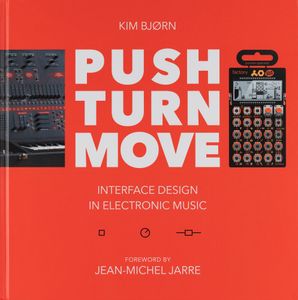

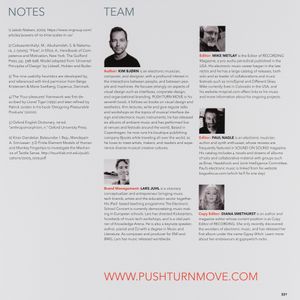
| Designed by | Kim Bjørn |
| Editor | Paul Nagle |
| Project Editor/Coordinator/Director | Lars Juhl |
| Publisher | Bjooks |
| Printed by | Specialtrykkeriet Arco A/S |
| Foreword by | Jean-Michel Jarre |
| Interview with/Interviewee | Suzanne Ciani, Dave Smith (4), Jordan Rudess, Richard Devine |
| Format | Hardback |
| Language | English |
| Location | Denmark |
| Copyright | 2017 |
| This Edition Published | 2018 |
| Pages / Font | 351 pages |
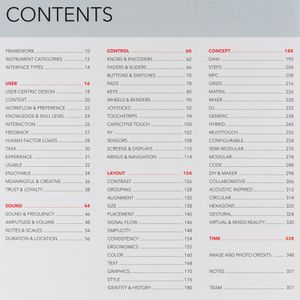
| Chapters | Contents
10 // Framework
12 // Instrument Categories
14 // Interface Types
16 // User
18 // User-Centric Design
20 // Context
22 // Workflow & Preference
24 // Knowledge & Skill Level
26 // Interaction
27 // Feedback
28 // Human Factor Loads
30 // Task
31 // Experience
32 // Usable
34 // Enjoyable
36 // Meaningful & Creative
38 // Trust & Loyalty
44 // Sound
46 // Sound & Frequency
48 // Amplitude & Volume
54 // Notes & Scales
56 // Duration & Location
60 // Control
62 // Knobs & Encoders
66 // Faders & Sliders
70 // Buttons & Switches
78 // Pads
80 // Keys
90 // Wheels & Benders
92 // Joysticks
94 // Touchstrips
100 // Capacitive Touch
102 // XY
108 // Sensors
110 // Screens & Displays
114 // Menus & Navigation
124 // Layout
126 // Contrast
128 // Grouping
130 // Alignment
138 // Size
140 // Placement
146 // Signal Flow
148 // Simplicity
154 // Consistency
155 // Ergonomics
160 // Color
168 // Text
170 // Graphics
176 // Style
180 // Identity & History
188 // Concept
190 // DAW
204 // Steps
208 // MPC
216 // Grids
226 // Matrix
228 // Mixer
232 // DJ
238 // Generic
240 // Hybrid
250 // Multitouch
258 // Configurable
270 // Semi-Modular
278 // Modular
288 // Code
298 // DIY & Maker
306 // Collaborative
312 // Acoustic Inspired
314 // Circular
320 // Hexagons
324 // Gestural
330 // Virtual & Mixed Reality
338 // Time
348 // Image And Photo Credits
351 // Notes
351 // Team
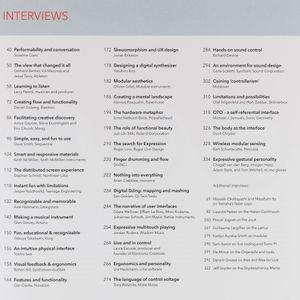
Interviews
40 // Performability and conversation
Suzanne Ciani
50 // The view that changed it all
Gerhard Behles, Ed Macovaz and Jesse Terry, Ableton
58 // Learning to listen
Larry Heard, musician and producer
72 // Creating flow and functionality
Daniel Troberg, Elektron
84 // Facilitating creative discovery
Amos Gaynes, Steve Dunnington and Eric Church, Moog
96 // Simple, easy, and fun to use
Dave Smith, Dave Smith Instruments
104 // Smart and responsive materials
Keith McMillen, Keith McMillen Instruments
112 // The distributed screen experience
Stephan Schmitt, Nonlinear Labs
118 // Instant fun with limitations
Jesper Kouthoofd, Teenage Engineering
132 // Recognizable and memorable
Axel Hartmann, Designbox
142 // Making a musical instrument
Glen Darcey, Arturia
150 // Fun, educational & recognizable
Tatsuya Takahashi, Korg
156 // An intuitive physical interface
Toshio Iwai
158 // Visual feedback & ergonomics
Rohan Hill, Synthstrom Audible
164 // Features and functionality
Dan Clarke, Novation
172 // Skeuomorphism and UX design
Jonas Eriksson
178 // Designing a digital synthesizer
Yasuhiro Kira
182 // Modular aesthetics
Olivier Gillet, Mutable Instruments
186 // Creating a mental landscape
Hannes Pasqualini, Papernoise
194 // The hardware metaphor
Ernst Nathorst-Böös, Propellerhead
198 // The role of functional beauty
Jun-ichi Miki, Roland Corporation
210 // The search for Expression
Roger Linn, Roger Linn Design
220 // Finger drumming and flow
DiViNCi
222 // Nothing into everything
Brian Crabtree, monome
234 // Digital DJing: mapping and mashing
Ean Golden, DJ TechTools
244 // The narrative of user interfaces
Gösta Wellmer, Efflam Le Bivic, Mino Kodama, Johannes Schroth, Jim Mazur, Native Instruments
254 // Expressive multitouch playing
Jordan Rudess, Wizdom Music
264 // Live and in control
Laura Escudé, producer and founder of Electronic Creatives
266 // Ergonomics and personality
Urs Heckmann, u-he software
274 // The language of control voltage
Tony Rolando, Make Noise
284 // Hands-on sound control
Richard Devine
294 // An environment for sound design
Carla Scaletti, Symbolic Sound Corporation
302 // Coining ’controllerism’
Moldover
310 // Limitations and possibilities
Olaf Hilgenfeld and Iftah Gabbai, Skinnerbox
318 // OTO – a self-referential interface
Michael J. Samuels, Sonic Geometry
326 // The body as the interface
Dorit Chrysler
328 // Wireless modular sensing
Bert Schiettecatte, Percussa
334 // Expressive gestural personality
Chagall van den Berg, Imogen Heap, Adam Stark, and Tom Mitchell, mi.mu gloves
Additional Interviews
69 // Masaaki Okabayashi and Masafumi Ito on Yamaha’s fader caps
82 // Lippold Haken on the Haken Continuum
260 // Pascal Joguet on the Joué
261 // Guillaume Largillier on the Lemur
275 // Kaitlyn Aurelia-Smith on modular
290 // Sam Aaron on live coding and Sonic Pi
291 // Ela Minus on the Organelle and tools
292 // Darwin Grosse on Max and Max for Live
322 // Jeff Snyder on the Snyderphonics Manta Contents
10 // Framework
12 // Instrument Categories
14 // Interface Types
16 // User
18 // User-Centric Design
20 // Context
22 // Workflow & Preference
24 // Knowledge & Skill Level
26 // Interaction
27 // Feedback
28 // Human Factor Loads
30 // Task
31 // Experience
32 // Usable
34 // Enjoyable
36 // Meaningful & Creative
38 // Trust & Loyalty
44 // Sound
46 // Sound & Frequency
48 // Amplitude & Volume
54 // Notes & Scales
56 // Duration & Location
60 // Control
62 // Knobs & Encoders
66 // Faders & Sliders
70 // Buttons & Switches
78 // Pads
80 // Keys
90 // Wheels & Benders
92 // Joysticks
94 // Touchstrips
100 // Capacitive Touch
102 // XY
108 // Sensors
110 // Screens & Displays
114 // Menus & Navigation
124 // Layout
126 // Contrast
128 // Grouping
130 // Alignment
138 // Size
140 // Placement
146 // Signal Flow
148 // Simplicity
154 // Consistency
155 // Ergonomics
160 // Color
168 // Text
170 // Graphics
176 // Style
180 // Identity & History
188 // Concept
190 // DAW
204 // Steps
208 // MPC
216 // Grids
226 // Matrix
228 // Mixer
232 // DJ
238 // Generic
240 // Hybrid
250 // Multitouch
258 // Configurable
270 // Semi-Modular
278 // Modular
288 // Code
298 // DIY & Maker
306 // Collaborative
312 // Acoustic Inspired
314 // Circular
320 // Hexagons
324 // Gestural
330 // Virtual & Mixed Reality
338 // Time
348 // Image And Photo Credits
351 // Notes
351 // Team
Interviews
40 // Performability and conversation
Suzanne Ciani
50 // The view that changed it all
Gerhard Behles, Ed Macovaz and Jesse Terry, Ableton
58 // Learning to listen
Larry Heard, musician and producer
72 // Creating flow and functionality
Daniel Troberg, Elektron
84 // Facilitating creative discovery
Amos Gaynes, Steve Dunnington and Eric Church, Moog
96 // Simple, easy, and fun to use
Dave Smith, Dave Smith Instruments
104 // Smart and responsive materials
Keith McMillen, Keith McMillen Instruments
112 // The distributed screen experience
Stephan Schmitt, Nonlinear Labs
118 // Instant fun with limitations
Jesper Kouthoofd, Teenage Engineering
132 // Recognizable and memorable
Axel Hartmann, Designbox
142 // Making a musical instrument
Glen Darcey, Arturia
150 // Fun, educational & recognizable
Tatsuya Takahashi, Korg
156 // An intuitive physical interface
Toshio Iwai
158 // Visual feedback & ergonomics
Rohan Hill, Synthstrom Audible
164 // Features and functionality
Dan Clarke, Novation
172 // Skeuomorphism and UX design
Jonas Eriksson
178 // Designing a digital synthesizer
Yasuhiro Kira
182 // Modular aesthetics
Olivier Gillet, Mutable Instruments
186 // Creating a mental landscape
Hannes Pasqualini, Papernoise
194 // The hardware metaphor
Ernst Nathorst-Böös, Propellerhead
198 // The role of functional beauty
Jun-ichi Miki, Roland Corporation
210 // The search for Expression
Roger Linn, Roger Linn Design
220 // Finger drumming and flow
DiViNCi
222 // Nothing into everything
Brian Crabtree, monome
234 // Digital DJing: mapping and mashing
Ean Golden, DJ TechTools
244 // The narrative of user interfaces
Gösta Wellmer, Efflam Le Bivic, Mino Kodama, Johannes Schroth, Jim Mazur, Native Instruments
254 // Expressive multitouch playing
Jordan Rudess, Wizdom Music
264 // Live and in control
Laura Escudé, producer and founder of Electronic Creatives
266 // Ergonomics and personality
Urs Heckmann, u-he software
274 // The language of control voltage
Tony Rolando, Make Noise
284 // Hands-on sound control
Richard Devine
294 // An environment for sound design
Carla Scaletti, Symbolic Sound Corporation
302 // Coining ’controllerism’
Moldover
310 // Limitations and possibilities
Olaf Hilgenfeld and Iftah Gabbai, Skinnerbox
318 // OTO – a self-referential interface
Michael J. Samuels, Sonic Geometry
326 // The body as the interface
Dorit Chrysler
328 // Wireless modular sensing
Bert Schiettecatte, Percussa
334 // Expressive gestural personality
Chagall van den Berg, Imogen Heap, Adam Stark, and Tom Mitchell, mi.mu gloves
Additional Interviews
69 // Masaaki Okabayashi and Masafumi Ito on Yamaha’s fader caps
82 // Lippold Haken on the Haken Continuum
260 // Pascal Joguet on the Joué
261 // Guillaume Largillier on the Lemur
275 // Kaitlyn Aurelia-Smith on modular
290 // Sam Aaron on live coding and Sonic Pi
291 // Ela Minus on the Organelle and tools
292 // Darwin Grosse on Max and Max for Live
322 // Jeff Snyder on the Snyderphonics Manta Show all ▾ |
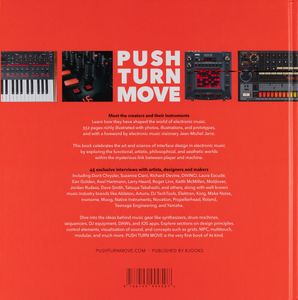
| Notes | Push Turn Move is a book about interface design of electronic music instruments and was crowdfunded on Kickstarter. The book was originally released in late 2017. |
Added by sharpmath