

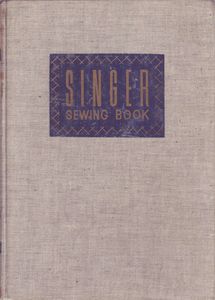
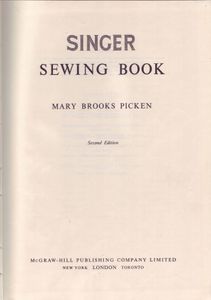
| Publisher | McGraw-Hill Publishing Company |
| Copyright Holder | The Singer Manufacturing Company |
| Format | Hardback |
| Language | English |
| First Printing in Country | 1954-04 |
| This Edition Published | 1955-06 |
| Pages / Font | 260 pages |
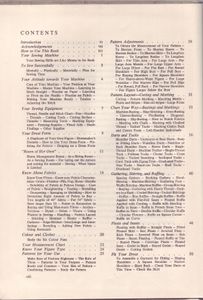
| Chapters | Introduction
Acknowledgements
How to Use This Book
Your Sewing Machine
Your Sewing Skills are Like Money in the Bank
To Sew Successfully
Mentally – Physically – Materially – Plan for Sewing Time
Your Attitude towards Your Machine
Care of Your Machine – Your Position at Your Machine – Master Your Machine – Learning To Stitch Straight – Practise on Paper – Learning to Pivot on the Needle – Practise on Fabric – Making Your Machine Ready – Tension – Adjusting the Stitch
Your Sewing Equipment
Thread, Needle and Stitch Chart – Pins – Needles – Threads – Cutting Tools – Cutting Surface – Thimble – Measuring Tools – Marking Equipment – Pressing Supplies – Visual Aids – Staple Findings – Other Supplies
Your Dress Form
A Duplicate of Your Own Figure – Dressmaker’s Dummy – How to Use Your Dress Form – Pin-fitting the Pattern – Draping on a Dress Form
”Room of Her Own”
Home Management Room – As a Sitting Room – As a Sewing Room – For Lating out the pattern and cutting the material – Sewing – When Space is Limited
Know About Fabrics
Know Your Fibres – Know your Fabric Characteristics – Grain – Finishes – Pile. Nap, Sheen – Handle – Suitability of Fabric to Pattern Design – Care of Fabric – Straightening – Tearing – Stretching – Dampening – Sponging or Shrinking – How to Determine Right Amount of Fabric to Buy – Two lengths of 40” fabric – for 54” fabric – Sizes larger then 20 – Points to Remember in Buying and Using Man-made Fibres – Acrilan – Terylene – Dynel – Orlon – Vicara – Using Plastics in Sewing – Handling – Pattern Layout – Stitching – Hemmer – Binder – Ruffler – Gatherer – Edge-Stitcher – Interlinings and Interfacings – Restyling – Adding New Fabric – Using Remnants
Colour and Clothes
Study the Six Colour Fans
Your Measurement Charts
Know Your Figure Type
Patterns for Your Use
Make Sure of Fashion Rightness – The Rule of Three – Patterns to Your Purpose – Pattern Books and Counters – Your Size of Pattern – Combining Patterns – Study the Pattern
Pattern Adjustments
To Obtain the Measurement of Your Pattern – To Shorten Front – To Shorten Sleeve – To Shorten Bodice – To Shorten Skirt – To Lengthen Sleeve – To Lengthen Bodice – To Lengthen Skirt – For Thing Arm – For Large Arm – For Large Arm Muscle – For Large Upper Arm – For Large Elbow – For Flat Bust – For Sloping Shoulders – For Square Shoulders -For Heave-above Waist Figures – For Large Waistline – For Narrow Hips – For Full Hips – For Round, Full Back – For Narrow Shoulders – For Figure Larger Below the Bust
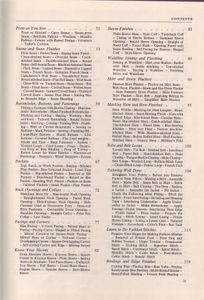
Pattern Layout – Cutting and Marking
Cutting – Pattern Marking – Matching Motifs – Plaids and Stripes – Bias-cut stripes – Large Prints
Chart Your Way – Basings and Markings
Machine-Basting – Stay-Stitching – Even-Basting – Uneven-Basting – Pin-Basting – Diagonal-Basting – Slip-Basting – How to Notch Fabrics – Marking with Chalk – Marking with Chalked Thread – Tailor’s Tacks – Marking Centre Back and Centre Front – Left-Handed Individuals
Darks and Tucks
Shoulder Darts – Underarm or Bust Darts – Body or Fitting Darts – Waistline Darts – Neckline or Back Shoulder Darts – Sleeve Darts – Single-Thread Tuck – Fullness Tucks – Cluster Tucks – Cross Tucks – Tucked Smocking – Scalloped Tucks – Cord Tuck with Zigzag Trim – Graduated Tucks – Nun Tucks – Hand-run Tucks – Shell Tucks – Overhand Tucks
Gathing, Shirring, and Ruffling
Spacing Gathers – Stroking Gathers – Hand-Shirring – Maching-Shirring – Gathering Foot – Waffle Shirring – Maching Ruffler – Group Shirring – Staying – Gathering with Elastic Thread – Gathers in a Slash – Corded Shirring – Tucked Shirrings – Ruffles – Bias Ruffles – Straight Ruffles – Ruffle Applied with Cording – Ruffle in French Seam Turn – Ruffles in Tiers – Double Ruffle – Circular Ruffle – Circular Flounce – Ruffle on Square Corner – Ruffle on Curve
Pleats and Insets
Pleating with Ruffler – Straigh Pleat – Fitted Pleated Skirt – Box Pleats – Inverted Pleat – Kick Pleats – Inverted Pleat on Seam – Side Pleats – Steam Pleating – Pleated Ruffle or Tier – Stayed Pleats – Cartridge Please – Pleated Inset – Godet in Slash – Stayed Godet – Shaped Godet – Cutting Godets
Fit Your Dress
To Assemble a Garment for Fitting – Sloping Shoulders – A Square Shoulder – Narrow Shoulders – Short Back – check Your Darts at This Time – Check the Skirt
Press as You Sew
Press as Stitched – Open Seams – Steam-press Seam – Synthetic Fabrucs – Woolens – Metallic Fabrics – Fabrics with Raised Design – Velveteen – Tailor’s Cushion
Seams and Seam Finishes
Plain Seam – Pinked Seam – zigzag Seam Finish – Clean-stitched Seam – Overcast Seam – Catch-stitched Seam – Double-stitched Seam – Bound Seam – Self-bound Sead – Machine-hemmed Seam = Picot Seam – Lapped Seam – Decorative Lapped Seam – French Seam – Imitation French Seam – Upholsterer’s Welt Seam – Top-stitched Seam – Broad-stitched Seam – Flat-Fell Seam – Welt Seam – Open-Welt or Tucked Seam – Strap Seam – Slot Seam – Piped Seam – Corded Seam – Welted Seam – Curved Seam – Inward Curved Seam – Outward Curved Seam – Seams That Meet – Joining Bias to Straight Edge – Seam Blending
Buttonholes, Buttons, and Fastenings
Fitting a Garment with Button Closing – Machine-made Buttonholes -Hand-Finished Buttonholes – Marking and Cutting – Staying – Working – Bars and Ends – Tailored Buttonhole – Bound Buttonholes – Marking – Cutting – Turning Welt – Finishing – Welt or Corded Buttonhole – Sewing on Buttons – Mark Position – Sewing – Finishing Off – Large-Hole Buttons – Shank Buttons – Link Buttons – Covered Buttons – Flat Lead weights – Hooks and Eyes – Snap Fasteners – Eyelets – Worked Loops – Cord Loops – Frongs – Decorative Frog of Bias Binding – Frog of Tubing – Button Loops for Sheer Fabrics – Hammer-on Fastenings – Snappers – Wood Snappers – Eyelets
Pockets
Top, Patch or Work Pockets – Staying – Stitched Flap Pocket – Bias-Trimmed Pocket – Lined Flap Pocket – Slip-Stitched Pocket – Inserted or Slit Pockets – Bias-bound Pocket – Bound or slot Pocket – Standing Welt Pocket – Pockets on Seam – Tailored Pockets – Stand Pocket – Flap Pocket
Neck Openings and Collars
Necklines Must Fit – Bias-bound Neck Opening – Straight-Bound Neck Opening – Faced Slash Opening – Slide-Fastener Neck Opening – Slide Fastener Used as Decorative Trim – Open-End Slide Fasteners – Convertible Front Opening – Shoulder Opening – Straight Collar – Peter Pan Collar – Low Necks
Facings and Corners
Bias facing – V-Neck Facing – Mitred Band or facing – Facing Curve – Shaped or Fitted Facing – Mitred Concave or Square-Neck Facing – Mitred Hem or Corner – Tailored Corner – Overlapping Corner – Square Overlapping Corner – Self-corded Corner and Edge – Mitring Stripes
Know Your Sleeves
Drop Shoulder Sleeve – Kimono Sleeve – Square Gusset in Kimono Sleeve – Plain Sleeve – Settign Sleeve in Armhole – Two-Piece Sleeve – Gathered-Top Sleeve – Puff Sleeve – Lined Short Sleeve – Raglan Sleeve – Epailet Sleeve – Shirt-Blouse Sleeve
Sleeve Finishes
Plain Sleeve Hem – Hem Cuff – Turn-back Cuff – Casing at Sleeve Bottom – Hemmed Sleeve Opening – Bound Sleeve Opening – Straight or Band Cuff – Faced Slash – Opening Faced with Seam Binding – Self-Facing for Sleeves – Shaped Cuff – Shirt-Sleeve Opening
Waistline Joining and Finishing
Joining at Waistline – Skirt over Bodice – Bodice over Skirt – Inside stitching – Top-stitched Waistline – Staying a Waistline – Finishing Skirts and Waistlines
Skirt and Dress Plackets
Peasant Skirt Placket – Placket on Skirt Seam – Welt-Seam Placket – Hook-andEye Dress Placket – Slide Fastener Dress Placket – Slide Fastener Skirt Placket – Skirt Belt – Applying Belting to Waistline of Skirt – Simplified Skirt Plcket
Making Hem and Hem Finishes
Hem Widths – Marking for Hem Lengths – Blind-Stitched Hems – Seam-Binding Finisg – Hem with Pinked Edge – Bias-bound Hem – Circular Hem – Hand Slip-stitched Hem – Catch-stitched Hem – Top-stitched Hem – Faced Hem – Bias-Binding Finishes – Hem over Pleat -Narrow Machine-stitched Hem – Wide Machine-stitched Hem – Rolled Hem – Italian Rolled Hem – Hald-Feather-Stitched Hem – Napery Hem – Milliner’s Fold
Belt and Belt Loops
Turned Belt – Tie Belt – Stitched Belt – Interlined Belt – Faced Belt – Hand-finished Belt – Plain Closing – Tongue Buckle Closing – Slide Closing – Belt Loops – Worked Loop – Bullion-Stitch Loop – Chain-Stitch Loop – Fabric Loop – French Tack
Tailoring Well Done
Straighten Your Fabric – Before you Remove Pattern from fabric – Making a Skirt – Assemble Skirt – Make Bely – Baste Belt to Skirt – Stitch Belt to Skirt – Belt Closing – The Hem – Making a Jacket – Assemble the Jacket – Fit Jacket – Check the Following when Fitting – Stitch the Jacket – Front Interfacing – Shrinking and Shaping Tape – Interfacing Undercollar – Apply Undercollar to Jacket – Make Buttonholes – Apply Facings – Finish Sleeves – Interfacing Hem Edge – Finish jacket – Press Jacket – Prepare the Lining – Stitch Lining – Insert Lining – Finish Sleeve Lining – Lining a Loose coat – Tailored Finishes – Arrowhead – Crow’s Foot – Bar Track
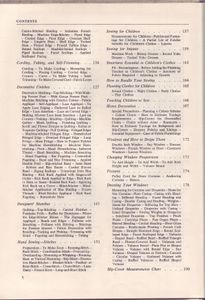
Learn to Do Fashion Stitches
Prepare Your Singer for Making Fashion Stitches – Removal of Presser Foot – Feed Dog and Bobbin Tension – Upper Tension – Ornamental Stitch – Etching Stitch – Signature Stitch – Spark Stitch – Cordonnet Stitch – Spiral Stitch – Metallic Stitch – Cable Stitch – Free-Motion Cable Stitch – Bouclé
Stitch
Bindings and Edge Finishes
Cutting Bias – Piecing Bias – Bias Tube – Piecing Read-made Bia Binding – Multi-Slotted Binder – Hand-Felled Binding – French Fold Binding – Centre-Stitched Binding – Imitation French Binding – Machine Edge-Stitcher – Piped Edge – Corded Edge – Picot edge – Overcast Shell Edge – Lingerie Hem – Shell Edge – Tucked Hem – Pinked Edge - Frayed Taffeta Edge – Bound Scallops – Machine-bound Scallops – Piped Scallops – Faced Scallops – Applied Scalloped Facing
Cording, Tubing, and Self-Trimming
Cording – To Make Cording – Measuring for Cording – Piecing Cording – Corded Edge – Corners – Curve – To Make Tubing – Inset Trimming – To Make Covered Cord-Fabric Loops
Decorative Finishes
Decorative Stitching – Top-Stitching – With Walking Presser Foot – With Gauge Presser Foot – Machine Stitching with Crochet Cotton – Fabric Appliqué – Self-Appliqué – Lace- Appliqué – To Apply Lace Edging – Gathered Lace on Rolled Edge – Lace Insertion – Lace on Curved Edge – Making All-over Lace from Insertion – Lace on Corners – Veining – Braiding – Quilting – Machine Quilter – Block Quilter – Block Quilter – Finishing Quilting – Scroll and Flower Designs in Quilting – Italian or Trapunto Quilting – Puff Quilting – Fringed Edges – Machine-stitched Fringed Edge – Hemstitched Fringed Edge – Overcast Fringed Edge – Loop Fringe – Moss Fringe – How to Prepare Fabrics for Machine Hemstitching – Machine Hemstitching – Picot – Hand Hemstitching – Inducted Thread – Hand Smocking – Machine Smocking – Hand Fagoting – Bar Fagoting – Cross-stitch Fogoting – Band and Bias Trimming – Applied Double Ford – Slip-stitched Band – Inset Band – Ribbon and Bias Bands – Corded Shirred Band – Zigzag Scallops – Trimmings from Bias Binding – Rick Rack Applied with Sungercraft Guide – Rick Rack Applied to Edge – Rick Rack in hem or Seam – Braided Rick Rack – Applying Rick Rack on a Curve – Blind-Stitcher – Blind-Stitcher Application of Bias Binding – Drawn Threads – Blind-Stitcher Appliqué – Rick Rack Fagoting – Buttonhole Slots
Designers’ Sketches
Quilting – Top-Stitching – Corded Finishes – Feminine Frills – Ruffles for Daintiness – Where the Edge-Stitcher Shines – The Zigzagger for Appliqué – Bands and Edges – Fullness with Smocking – Fullness with Shirring – Shirrings for Fashion Interest – Fabric Decoration with Braiding – Tucking and Pinking – Trimming with Braid – Fagoting and Hemstitching – Tubing
Hand Sewing-Stitches
Preparation – To Make Knot – Running-Stitch – Back-Stitch – Combination-Stitch – Overcasting – Overhanding – Hemming or Whipping – Running-Hem or Vertical Hemming – Slip-Stitch – Decorative Hand-Stitches – Blanket-Stitch – Feather- or Brier-Stitch – Cross-Stitch – Chain-Stitch – Lazy-Daisy – French Knot – Long-and-Short Stitch
Sewing for Children
Measurements for Children – Fabrics and Fastening for Children – A Partial List of Fabrics Suitable for Children’s Clothes – Layette
Smartness Essential in Children’s Clothes
Fit- Becomingness – Before Adding the Finishing Touches to Children’s Clothes – Amounts of Fabric Required – Adjusting to Growth
How to Bundle Your Sewing
Planning Clothes for Children
School Clothes – Night Clothes – Party Clothes – Play Clothes
Teaching Children to Sew
Home Decoration
Special Precautions – Planning a Clout Scheme – Colour Charts – How to Estimate Yardage Requirements – Slip-Covers for Overstuffed Chairs – Chairs without Arms – Remnants – How to Estimate Yardage for Bedspreads and slip covers – Drapery Fabrics and Linings – Essential Equipment – Care of Fabric Furnishings
Windows and How to Drape Them
Double Sash Window – Bay Window – Dormer Windows – French Window or Door – Casement Windows – Louver Windows
Changing Window Proportions
To Add Height – To Add Width – To Add Both Height and Width – Valance Board
Fixtures
Pulley Cord for Draw Curtains – Anchoring Curtains – Return
Dressing Your Windows
Measuring for Curtains and Draperies – Hems for Net Curtains – Plain Casing – Casing with Heading – Stiffened Heading – Faced Heading and Casing – Double Casing and Heading – Weights – Hems for Draperies – Stiffening for Top Hem – Unlined Draperies – Draperies with Casing -Lined Draperies – Putting Weights in Draperies – Interlined Draperies – Top Finishes – Pinch Pleats – Cartridge Pleats – Pipe Organ Pleats – Shirred Heading – Corded Heading – Hour-Glass Curtains – Ready-made Pleating – French Café Drapes – Straight hemmed Edge – Bound Scalloped Edge – Faced Scalloped Edge – Tiebacks – Shaped Band – Ruffled Band – Ruffled Triangle Band – Flower-Covered Band – Valances and Pelmets – Valance Board – Plain Flat or shaped Valance – Valance with Bound Edge – Box Valance – Draped Valance ot Festoon – Cascade – Circular Valance – Gathered Valance with Casing – Ruffled Valances – Ruffled Shaped Valance
Slip-Cover Measurements Chart
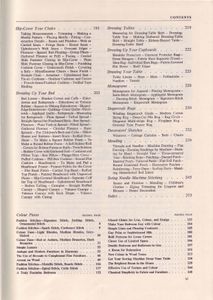
Slip-Cover Your Chairs
Taking Measurements – Trimmings – Making a Muslin Pattern – Placing Motifs – Fitting – Construction Details – Seams and Finishes – Welt or Corded Seam – Fringe Seam – Bound Seam – Upholsterer’s Welt Seam – Overcast Edges – Flounces – Spaced Box Pleating – Group Pleats – Gathered Flounce or Frill – Facing – Corded Slide fastener Closing in Slip Cover – Plain Slide Fastener Closing in Slip-Cover – Finishing Cushion Cover – Underneath Finish – Covering a Sofa – Miscellaneous Chairs – Seam Finish – Straight Chair – Armchair – Upholstered Seat – Tie-on Cushions – Outdoor Cushions and Covers – French-Seam-Finished Cushion – Twilled Tape Binding
Dressing Up Your Bed
Bed Linens – Blanket Covers and Cuffs – Eiderdowns and Bedspreads – Eiderdown or Tubular Bolster – Square or Oblong Eiderdowns – Shaped Edge Eiderdowns – Quilting -Carzy Quilts – Patchwork – Appliqué Quilts – Bedspreads – Measuring for Bedspreads – Plain Spread – Tufted Spread – Straight Spread for Footboard Beds – Box Spread- Flounces – Plain Tuck-in Spread – Fitted Spread – Gathered Flounce – Circular Flounce – Sheer Spreads – For Children’s Beds and Cribs – Pillow Shams and Bolsters – Insert Sham – Ruffled Over-Sham – To Make a Square Bolster Form – To Make a Round Bolster Form – A Soft Bolster Roll – Covers for Bolster Forms or Rolls – Twin Bolsters – Bolster Cover with Gathered End – Cushions and Pillow Tops – Box Pillow – Flange-Hem Cover – Puffed Cushion – Headboards – To Make and pad a Headboard Frame – Prepare Fabric for the Cover – Flat Band Finish – Corded Top band – Ruffled Top Finish – Padded Headboard with Unpressed Pleats – Slip-Covered Headbord – Separate Cuff for Top of Headboard – Upholstered Headboard – Button Tufting – Canopies – Straight Ruffled Canopy – Shaped Canopy – Valance Canopy – Valance Canopy with Back Drape – Valance Canopy with Casing
Dressing Tables
Measuring for Dressing-Table Skirt – Dressing-Table Top – Making Gathered Dressing-table Skirt – Straight Table – Kidney-Shaped Table – Dressing-Table Shelf
Dressing Up Your Cupboards
Shoulder Protectors – Garment Protector Bags – Dress Hangers – Fabric Show Supports (Trees) – Shoe Bag – Individual Shoe Bags – Fabric-Covered Hat Boxes – Shelf Edges
Dressing Your Table
Table Linens – Sizes – Mats – Tablecloths – Napkins – Towels
Monograms
Monograms for Apparel – Placing Monograms – Satin-Stitch Monogram – Appliquéd Monogram – Darning-Stitch Monogram – Signature-Stitch Monogram – Singercraft Monogram
Singercraft Rugs
Winding Singercraft Guide – Modern Cotton String Rug – Deep-Cut Pile Rug – Rag Circle – Diagonal Multi-stripe Rug – Fireplace Rug – Oriental Type Prayers Rug
Decorator’s Sketches
Windows – Cottage Curtains – Beds -Chairs
Mending
Threads and Needles – Machine Darning – Flat Darning – Darning Stockings by Machine – Darning by Hand – Straight Tear – Three-cornered Tear – Stocking Runs – patching – Darned Patch – Inserted Patch – Tailored Patch – Decorative Patches – Reinforcing – Terry Darn – Scallop Darn – Mending Hemstitched bed Linen
Swing Needle Machine Stitching
Seams and Finishes – Mending – Children’s Clothes – Zigzag Trimming for Lingerie and Blouses – Home Decoration
Index
Colour Plates
Fashion Stitches – Signature Stitch, Etching Stitch, Ornamental Stitch
Fashion Stitches – Spark Stitch, Cordonnet Stitch
Colour Fans – Light Blonds, Medium Blondes, Grey-Haired
Colour Fans – Red or Auburn, Medium Brunettes, Dark Brunettes
Simple Luxury
Antique and Modern Furniture in Harmony
The Use of Brocade to Complement Fine Furniture
Accent on Wood
Fashion Stitches – Metallic Stitch, Boucle Stitch
Fashion Stitches – Spiral Stitch, Cable Stitch
A Truly Feminine Bedroom
Glazed Chintz for Line, Colour, and Design
Make Your Bedroom Gay with Colour
Simple Lines and Pleasing Contrasts
Gay Print or Sophisticated Silk
Bold Patterns for Loose covers
Clever Use of Limited Space
Double Bedroom and Bathroom in One
A Room for Relaxation
New Colour in Wood Tones
Let Your Sewing Machine Dress Your Table
The Brightest Room in the House
Effective Use of Texture and Colour
Classical Simplicity in Fabric and Furniture
Introduction
Acknowledgements
How to Use This Book
Your Sewing Machine
Your Sewing Skills are Like Money in the Bank
To Sew Successfully
Mentally – Physically – Materially – Plan for Sewing Time
Your Attitude towards Your Machine
Care of Your Machine – Your Position at Your Machine – Master Your Machine – Learning To Stitch Straight – Practise on Paper – Learning to Pivot on the Needle – Practise on Fabric – Making Your Machine Ready – Tension – Adjusting the Stitch
Your Sewing Equipment
Thread, Needle and Stitch Chart – Pins – Needles – Threads – Cutting Tools – Cutting Surface – Thimble – Measuring Tools – Marking Equipment – Pressing Supplies – Visual Aids – Staple Findings – Other Supplies
Your Dress Form
A Duplicate of Your Own Figure – Dressmaker’s Dummy – How to Use Your Dress Form – Pin-fitting the Pattern – Draping on a Dress Form
”Room of Her Own”
Home Management Room – As a Sitting Room – As a Sewing Room – For Lating out the pattern and cutting the material – Sewing – When Space is Limited
Know About Fabrics
Know Your Fibres – Know your Fabric Characteristics – Grain – Finishes – Pile. Nap, Sheen – Handle – Suitability of Fabric to Pattern Design – Care of Fabric – Straightening – Tearing – Stretching – Dampening – Sponging or Shrinking – How to Determine Right Amount of Fabric to Buy – Two lengths of 40” fabric – for 54” fabric – Sizes larger then 20 – Points to Remember in Buying and Using Man-made Fibres – Acrilan – Terylene – Dynel – Orlon – Vicara – Using Plastics in Sewing – Handling – Pattern Layout – Stitching – Hemmer – Binder – Ruffler – Gatherer – Edge-Stitcher – Interlinings and Interfacings – Restyling – Adding New Fabric – Using Remnants
Colour and Clothes
Study the Six Colour Fans
Your Measurement Charts
Know Your Figure Type
Patterns for Your Use
Make Sure of Fashion Rightness – The Rule of Three – Patterns to Your Purpose – Pattern Books and Counters – Your Size of Pattern – Combining Patterns – Study the Pattern
Pattern Adjustments
To Obtain the Measurement of Your Pattern – To Shorten Front – To Shorten Sleeve – To Shorten Bodice – To Shorten Skirt – To Lengthen Sleeve – To Lengthen Bodice – To Lengthen Skirt – For Thing Arm – For Large Arm – For Large Arm Muscle – For Large Upper Arm – For Large Elbow – For Flat Bust – For Sloping Shoulders – For Square Shoulders -For Heave-above Waist Figures – For Large Waistline – For Narrow Hips – For Full Hips – For Round, Full Back – For Narrow Shoulders – For Figure Larger Below the Bust
Pattern Layout – Cutting and Marking
Cutting – Pattern Marking – Matching Motifs – Plaids and Stripes – Bias-cut stripes – Large Prints
Chart Your Way – Basings and Markings
Machine-Basting – Stay-Stitching – Even-Basting – Uneven-Basting – Pin-Basting – Diagonal-Basting – Slip-Basting – How to Notch Fabrics – Marking with Chalk – Marking with Chalked Thread – Tailor’s Tacks – Marking Centre Back and Centre Front – Left-Handed Individuals
Darks and Tucks
Shoulder Darts – Underarm or Bust Darts – Body or Fitting Darts – Waistline Darts – Neckline or Back Shoulder Darts – Sleeve Darts – Single-Thread Tuck – Fullness Tucks – Cluster Tucks – Cross Tucks – Tucked Smocking – Scalloped Tucks – Cord Tuck with Zigzag Trim – Graduated Tucks – Nun Tucks – Hand-run Tucks – Shell Tucks – Overhand Tucks
Gathing, Shirring, and Ruffling
Spacing Gathers – Stroking Gathers – Hand-Shirring – Maching-Shirring – Gathering Foot – Waffle Shirring – Maching Ruffler – Group Shirring – Staying – Gathering with Elastic Thread – Gathers in a Slash – Corded Shirring – Tucked Shirrings – Ruffles – Bias Ruffles – Straight Ruffles – Ruffle Applied with Cording – Ruffle in French Seam Turn – Ruffles in Tiers – Double Ruffle – Circular Ruffle – Circular Flounce – Ruffle on Square Corner – Ruffle on Curve
Pleats and Insets
Pleating with Ruffler – Straigh Pleat – Fitted Pleated Skirt – Box Pleats – Inverted Pleat – Kick Pleats – Inverted Pleat on Seam – Side Pleats – Steam Pleating – Pleated Ruffle or Tier – Stayed Pleats – Cartridge Please – Pleated Inset – Godet in Slash – Stayed Godet – Shaped Godet – Cutting Godets
Fit Your Dress
To Assemble a Garment for Fitting – Sloping Shoulders – A Square Shoulder – Narrow Shoulders – Short Back – check Your Darts at This Time – Check the Skirt
Press as You Sew
Press as Stitched – Open Seams – Steam-press Seam – Synthetic Fabrucs – Woolens – Metallic Fabrics – Fabrics with Raised Design – Velveteen – Tailor’s Cushion
Seams and Seam Finishes
Plain Seam – Pinked Seam – zigzag Seam Finish – Clean-stitched Seam – Overcast Seam – Catch-stitched Seam – Double-stitched Seam – Bound Seam – Self-bound Sead – Machine-hemmed Seam = Picot Seam – Lapped Seam – Decorative Lapped Seam – French Seam – Imitation French Seam – Upholsterer’s Welt Seam – Top-stitched Seam – Broad-stitched Seam – Flat-Fell Seam – Welt Seam – Open-Welt or Tucked Seam – Strap Seam – Slot Seam – Piped Seam – Corded Seam – Welted Seam – Curved Seam – Inward Curved Seam – Outward Curved Seam – Seams That Meet – Joining Bias to Straight Edge – Seam Blending
Buttonholes, Buttons, and Fastenings
Fitting a Garment with Button Closing – Machine-made Buttonholes -Hand-Finished Buttonholes – Marking and Cutting – Staying – Working – Bars and Ends – Tailored Buttonhole – Bound Buttonholes – Marking – Cutting – Turning Welt – Finishing – Welt or Corded Buttonhole – Sewing on Buttons – Mark Position – Sewing – Finishing Off – Large-Hole Buttons – Shank Buttons – Link Buttons – Covered Buttons – Flat Lead weights – Hooks and Eyes – Snap Fasteners – Eyelets – Worked Loops – Cord Loops – Frongs – Decorative Frog of Bias Binding – Frog of Tubing – Button Loops for Sheer Fabrics – Hammer-on Fastenings – Snappers – Wood Snappers – Eyelets
Pockets
Top, Patch or Work Pockets – Staying – Stitched Flap Pocket – Bias-Trimmed Pocket – Lined Flap Pocket – Slip-Stitched Pocket – Inserted or Slit Pockets – Bias-bound Pocket – Bound or slot Pocket – Standing Welt Pocket – Pockets on Seam – Tailored Pockets – Stand Pocket – Flap Pocket
Neck Openings and Collars
Necklines Must Fit – Bias-bound Neck Opening – Straight-Bound Neck Opening – Faced Slash Opening – Slide-Fastener Neck Opening – Slide Fastener Used as Decorative Trim – Open-End Slide Fasteners – Convertible Front Opening – Shoulder Opening – Straight Collar – Peter Pan Collar – Low Necks
Facings and Corners
Bias facing – V-Neck Facing – Mitred Band or facing – Facing Curve – Shaped or Fitted Facing – Mitred Concave or Square-Neck Facing – Mitred Hem or Corner – Tailored Corner – Overlapping Corner – Square Overlapping Corner – Self-corded Corner and Edge – Mitring Stripes
Know Your Sleeves
Drop Shoulder Sleeve – Kimono Sleeve – Square Gusset in Kimono Sleeve – Plain Sleeve – Settign Sleeve in Armhole – Two-Piece Sleeve – Gathered-Top Sleeve – Puff Sleeve – Lined Short Sleeve – Raglan Sleeve – Epailet Sleeve – Shirt-Blouse Sleeve
Sleeve Finishes
Plain Sleeve Hem – Hem Cuff – Turn-back Cuff – Casing at Sleeve Bottom – Hemmed Sleeve Opening – Bound Sleeve Opening – Straight or Band Cuff – Faced Slash – Opening Faced with Seam Binding – Self-Facing for Sleeves – Shaped Cuff – Shirt-Sleeve Opening
Waistline Joining and Finishing
Joining at Waistline – Skirt over Bodice – Bodice over Skirt – Inside stitching – Top-stitched Waistline – Staying a Waistline – Finishing Skirts and Waistlines
Skirt and Dress Plackets
Peasant Skirt Placket – Placket on Skirt Seam – Welt-Seam Placket – Hook-andEye Dress Placket – Slide Fastener Dress Placket – Slide Fastener Skirt Placket – Skirt Belt – Applying Belting to Waistline of Skirt – Simplified Skirt Plcket
Making Hem and Hem Finishes
Hem Widths – Marking for Hem Lengths – Blind-Stitched Hems – Seam-Binding Finisg – Hem with Pinked Edge – Bias-bound Hem – Circular Hem – Hand Slip-stitched Hem – Catch-stitched Hem – Top-stitched Hem – Faced Hem – Bias-Binding Finishes – Hem over Pleat -Narrow Machine-stitched Hem – Wide Machine-stitched Hem – Rolled Hem – Italian Rolled Hem – Hald-Feather-Stitched Hem – Napery Hem – Milliner’s Fold
Belt and Belt Loops
Turned Belt – Tie Belt – Stitched Belt – Interlined Belt – Faced Belt – Hand-finished Belt – Plain Closing – Tongue Buckle Closing – Slide Closing – Belt Loops – Worked Loop – Bullion-Stitch Loop – Chain-Stitch Loop – Fabric Loop – French Tack
Tailoring Well Done
Straighten Your Fabric – Before you Remove Pattern from fabric – Making a Skirt – Assemble Skirt – Make Bely – Baste Belt to Skirt – Stitch Belt to Skirt – Belt Closing – The Hem – Making a Jacket – Assemble the Jacket – Fit Jacket – Check the Following when Fitting – Stitch the Jacket – Front Interfacing – Shrinking and Shaping Tape – Interfacing Undercollar – Apply Undercollar to Jacket – Make Buttonholes – Apply Facings – Finish Sleeves – Interfacing Hem Edge – Finish jacket – Press Jacket – Prepare the Lining – Stitch Lining – Insert Lining – Finish Sleeve Lining – Lining a Loose coat – Tailored Finishes – Arrowhead – Crow’s Foot – Bar Track
Learn to Do Fashion Stitches
Prepare Your Singer for Making Fashion Stitches – Removal of Presser Foot – Feed Dog and Bobbin Tension – Upper Tension – Ornamental Stitch – Etching Stitch – Signature Stitch – Spark Stitch – Cordonnet Stitch – Spiral Stitch – Metallic Stitch – Cable Stitch – Free-Motion Cable Stitch – Bouclé
Stitch
Bindings and Edge Finishes
Cutting Bias – Piecing Bias – Bias Tube – Piecing Read-made Bia Binding – Multi-Slotted Binder – Hand-Felled Binding – French Fold Binding – Centre-Stitched Binding – Imitation French Binding – Machine Edge-Stitcher – Piped Edge – Corded Edge – Picot edge – Overcast Shell Edge – Lingerie Hem – Shell Edge – Tucked Hem – Pinked Edge - Frayed Taffeta Edge – Bound Scallops – Machine-bound Scallops – Piped Scallops – Faced Scallops – Applied Scalloped Facing
Cording, Tubing, and Self-Trimming
Cording – To Make Cording – Measuring for Cording – Piecing Cording – Corded Edge – Corners – Curve – To Make Tubing – Inset Trimming – To Make Covered Cord-Fabric Loops
Decorative Finishes
Decorative Stitching – Top-Stitching – With Walking Presser Foot – With Gauge Presser Foot – Machine Stitching with Crochet Cotton – Fabric Appliqué – Self-Appliqué – Lace- Appliqué – To Apply Lace Edging – Gathered Lace on Rolled Edge – Lace Insertion – Lace on Curved Edge – Making All-over Lace from Insertion – Lace on Corners – Veining – Braiding – Quilting – Machine Quilter – Block Quilter – Block Quilter – Finishing Quilting – Scroll and Flower Designs in Quilting – Italian or Trapunto Quilting – Puff Quilting – Fringed Edges – Machine-stitched Fringed Edge – Hemstitched Fringed Edge – Overcast Fringed Edge – Loop Fringe – Moss Fringe – How to Prepare Fabrics for Machine Hemstitching – Machine Hemstitching – Picot – Hand Hemstitching – Inducted Thread – Hand Smocking – Machine Smocking – Hand Fagoting – Bar Fagoting – Cross-stitch Fogoting – Band and Bias Trimming – Applied Double Ford – Slip-stitched Band – Inset Band – Ribbon and Bias Bands – Corded Shirred Band – Zigzag Scallops – Trimmings from Bias Binding – Rick Rack Applied with Sungercraft Guide – Rick Rack Applied to Edge – Rick Rack in hem or Seam – Braided Rick Rack – Applying Rick Rack on a Curve – Blind-Stitcher – Blind-Stitcher Application of Bias Binding – Drawn Threads – Blind-Stitcher Appliqué – Rick Rack Fagoting – Buttonhole Slots
Designers’ Sketches
Quilting – Top-Stitching – Corded Finishes – Feminine Frills – Ruffles for Daintiness – Where the Edge-Stitcher Shines – The Zigzagger for Appliqué – Bands and Edges – Fullness with Smocking – Fullness with Shirring – Shirrings for Fashion Interest – Fabric Decoration with Braiding – Tucking and Pinking – Trimming with Braid – Fagoting and Hemstitching – Tubing
Hand Sewing-Stitches
Preparation – To Make Knot – Running-Stitch – Back-Stitch – Combination-Stitch – Overcasting – Overhanding – Hemming or Whipping – Running-Hem or Vertical Hemming – Slip-Stitch – Decorative Hand-Stitches – Blanket-Stitch – Feather- or Brier-Stitch – Cross-Stitch – Chain-Stitch – Lazy-Daisy – French Knot – Long-and-Short Stitch
Sewing for Children
Measurements for Children – Fabrics and Fastening for Children – A Partial List of Fabrics Suitable for Children’s Clothes – Layette
Smartness Essential in Children’s Clothes
Fit- Becomingness – Before Adding the Finishing Touches to Children’s Clothes – Amounts of Fabric Required – Adjusting to Growth
How to Bundle Your Sewing
Planning Clothes for Children
School Clothes – Night Clothes – Party Clothes – Play Clothes
Teaching Children to Sew
Home Decoration
Special Precautions – Planning a Clout Scheme – Colour Charts – How to Estimate Yardage Requirements – Slip-Covers for Overstuffed Chairs – Chairs without Arms – Remnants – How to Estimate Yardage for Bedspreads and slip covers – Drapery Fabrics and Linings – Essential Equipment – Care of Fabric Furnishings
Windows and How to Drape Them
Double Sash Window – Bay Window – Dormer Windows – French Window or Door – Casement Windows – Louver Windows
Changing Window Proportions
To Add Height – To Add Width – To Add Both Height and Width – Valance Board
Fixtures
Pulley Cord for Draw Curtains – Anchoring Curtains – Return
Dressing Your Windows
Measuring for Curtains and Draperies – Hems for Net Curtains – Plain Casing – Casing with Heading – Stiffened Heading – Faced Heading and Casing – Double Casing and Heading – Weights – Hems for Draperies – Stiffening for Top Hem – Unlined Draperies – Draperies with Casing -Lined Draperies – Putting Weights in Draperies – Interlined Draperies – Top Finishes – Pinch Pleats – Cartridge Pleats – Pipe Organ Pleats – Shirred Heading – Corded Heading – Hour-Glass Curtains – Ready-made Pleating – French Café Drapes – Straight hemmed Edge – Bound Scalloped Edge – Faced Scalloped Edge – Tiebacks – Shaped Band – Ruffled Band – Ruffled Triangle Band – Flower-Covered Band – Valances and Pelmets – Valance Board – Plain Flat or shaped Valance – Valance with Bound Edge – Box Valance – Draped Valance ot Festoon – Cascade – Circular Valance – Gathered Valance with Casing – Ruffled Valances – Ruffled Shaped Valance
Slip-Cover Measurements Chart
Slip-Cover Your Chairs
Taking Measurements – Trimmings – Making a Muslin Pattern – Placing Motifs – Fitting – Construction Details – Seams and Finishes – Welt or Corded Seam – Fringe Seam – Bound Seam – Upholsterer’s Welt Seam – Overcast Edges – Flounces – Spaced Box Pleating – Group Pleats – Gathered Flounce or Frill – Facing – Corded Slide fastener Closing in Slip Cover – Plain Slide Fastener Closing in Slip-Cover – Finishing Cushion Cover – Underneath Finish – Covering a Sofa – Miscellaneous Chairs – Seam Finish – Straight Chair – Armchair – Upholstered Seat – Tie-on Cushions – Outdoor Cushions and Covers – French-Seam-Finished Cushion – Twilled Tape Binding
Dressing Up Your Bed
Bed Linens – Blanket Covers and Cuffs – Eiderdowns and Bedspreads – Eiderdown or Tubular Bolster – Square or Oblong Eiderdowns – Shaped Edge Eiderdowns – Quilting -Carzy Quilts – Patchwork – Appliqué Quilts – Bedspreads – Measuring for Bedspreads – Plain Spread – Tufted Spread – Straight Spread for Footboard Beds – Box Spread- Flounces – Plain Tuck-in Spread – Fitted Spread – Gathered Flounce – Circular Flounce – Sheer Spreads – For Children’s Beds and Cribs – Pillow Shams and Bolsters – Insert Sham – Ruffled Over-Sham – To Make a Square Bolster Form – To Make a Round Bolster Form – A Soft Bolster Roll – Covers for Bolster Forms or Rolls – Twin Bolsters – Bolster Cover with Gathered End – Cushions and Pillow Tops – Box Pillow – Flange-Hem Cover – Puffed Cushion – Headboards – To Make and pad a Headboard Frame – Prepare Fabric for the Cover – Flat Band Finish – Corded Top band – Ruffled Top Finish – Padded Headboard with Unpressed Pleats – Slip-Covered Headbord – Separate Cuff for Top of Headboard – Upholstered Headboard – Button Tufting – Canopies – Straight Ruffled Canopy – Shaped Canopy – Valance Canopy – Valance Canopy with Back Drape – Valance Canopy with Casing
Dressing Tables
Measuring for Dressing-Table Skirt – Dressing-Table Top – Making Gathered Dressing-table Skirt – Straight Table – Kidney-Shaped Table – Dressing-Table Shelf
Dressing Up Your Cupboards
Shoulder Protectors – Garment Protector Bags – Dress Hangers – Fabric Show Supports (Trees) – Shoe Bag – Individual Shoe Bags – Fabric-Covered Hat Boxes – Shelf Edges
Dressing Your Table
Table Linens – Sizes – Mats – Tablecloths – Napkins – Towels
Monograms
Monograms for Apparel – Placing Monograms – Satin-Stitch Monogram – Appliquéd Monogram – Darning-Stitch Monogram – Signature-Stitch Monogram – Singercraft Monogram
Singercraft Rugs
Winding Singercraft Guide – Modern Cotton String Rug – Deep-Cut Pile Rug – Rag Circle – Diagonal Multi-stripe Rug – Fireplace Rug – Oriental Type Prayers Rug
Decorator’s Sketches
Windows – Cottage Curtains – Beds -Chairs
Mending
Threads and Needles – Machine Darning – Flat Darning – Darning Stockings by Machine – Darning by Hand – Straight Tear – Three-cornered Tear – Stocking Runs – patching – Darned Patch – Inserted Patch – Tailored Patch – Decorative Patches – Reinforcing – Terry Darn – Scallop Darn – Mending Hemstitched bed Linen
Swing Needle Machine Stitching
Seams and Finishes – Mending – Children’s Clothes – Zigzag Trimming for Lingerie and Blouses – Home Decoration
Index
Colour Plates
Fashion Stitches – Signature Stitch, Etching Stitch, Ornamental Stitch
Fashion Stitches – Spark Stitch, Cordonnet Stitch
Colour Fans – Light Blonds, Medium Blondes, Grey-Haired
Colour Fans – Red or Auburn, Medium Brunettes, Dark Brunettes
Simple Luxury
Antique and Modern Furniture in Harmony
The Use of Brocade to Complement Fine Furniture
Accent on Wood
Fashion Stitches – Metallic Stitch, Boucle Stitch
Fashion Stitches – Spiral Stitch, Cable Stitch
A Truly Feminine Bedroom
Glazed Chintz for Line, Colour, and Design
Make Your Bedroom Gay with Colour
Simple Lines and Pleasing Contrasts
Gay Print or Sophisticated Silk
Bold Patterns for Loose covers
Clever Use of Limited Space
Double Bedroom and Bathroom in One
A Room for Relaxation
New Colour in Wood Tones
Let Your Sewing Machine Dress Your Table
The Brightest Room in the House
Effective Use of Texture and Colour
Classical Simplicity in Fabric and Furniture
Show all ▾ |
Added by Vhazza