




Bounded Choice: True Believers and Charismatic Cults
| Format | Paperback |
| Language | English |
| Copyright | 2004 |
| Publisher | University of California Press |
| About/Subject | Heaven's Gate, The Democratic Workers Party |
| Format | Paperback |
| Language | English |
| Location | United States |
| Copyright | 2004 |
| ISBN 10 | 0-520-24018-9 |
| Library of Congress Classification Number | BP605.H36L35 |
| Dewey Decimal Classification Number | 306'.I—dc22 |
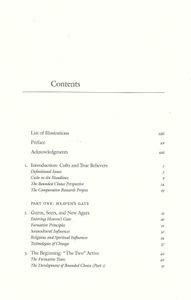
| Chapters | List of Illustrations
Preface
Acknowledgements
1. Introduction: Cults and True Believers
Definitional Issues
Cults in the Headlines
The Bounded Choice Perspective
The Comparative Research Project
PART ONE: HEAVEN'S GATE
2. Gurus, Seers, and New Agers
Entering Heaven's Gate
Formative Principles
Sociocultural Influences
Religious and Spiritual Influences
Technologies of Change
3. The Beginning: "The Two" Arrive
The Formative Years
The Development of Bounded Choice (Part 1)
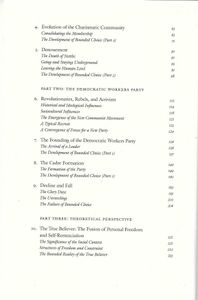
4. Evolution of the Charismatic Community
Consolidating the Membership
The Development of Bounded Choice (Part 2)
5. Denouement
The Death of Nettles
Going and Staying Underground
Leaving the Human Level
The Development of Bounded Choice (Part 3)
PART TWO: THE DEMOCRATIC WORKERS PARTY
6. Revolutionaries, Rebels, and Activists
Historical and Ideological Influences
Sociocultural Influences
The Emergence of the New Communist Movement
A Typical Recruit
A Convergence of Forces for a New Party
7. The Founding of the Democratic Workers Party
The Arrival of a Leader
The Development of Bounded Choice (Part 1)
8. The Cadre Formation
The Formation of the Party
The Development of Bounded Choice (Part 2)
9. Decline and Fall
The Glory Days
The Unraveling
The Failure of Bounded Choice
PART THREE: THEORETICAL PERSPECTIVE
10. The True Believer: The Fusion of Personal Freedom and Self-Renunciation
The Significance of the Social Context
Structures of Freedom and Constraint
The Bounded Reality of the True Believer
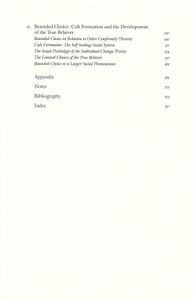
11. Bounded Choice: Cult Formation and the Development of the True Believer
Bounded Choice in Relation to Other Conformity Theories
Cult Formation: The Self-Sealing Social System
The Social Psychology of the Individual Change Process
The Limited Choices of the True Believer
Bounded Choice as a Larger Social Phenomenon
Appendix
Notes
Bibliography
Index
List of Illustrations
Preface
Acknowledgements
1. Introduction: Cults and True Believers
Definitional Issues
Cults in the Headlines
The Bounded Choice Perspective
The Comparative Research Project
PART ONE: HEAVEN'S GATE
2. Gurus, Seers, and New Agers
Entering Heaven's Gate
Formative Principles
Sociocultural Influences
Religious and Spiritual Influences
Technologies of Change
3. The Beginning: "The Two" Arrive
The Formative Years
The Development of Bounded Choice (Part 1)
4. Evolution of the Charismatic Community
Consolidating the Membership
The Development of Bounded Choice (Part 2)
5. Denouement
The Death of Nettles
Going and Staying Underground
Leaving the Human Level
The Development of Bounded Choice (Part 3)
PART TWO: THE DEMOCRATIC WORKERS PARTY
6. Revolutionaries, Rebels, and Activists
Historical and Ideological Influences
Sociocultural Influences
The Emergence of the New Communist Movement
A Typical Recruit
A Convergence of Forces for a New Party
7. The Founding of the Democratic Workers Party
The Arrival of a Leader
The Development of Bounded Choice (Part 1)
8. The Cadre Formation
The Formation of the Party
The Development of Bounded Choice (Part 2)
9. Decline and Fall
The Glory Days
The Unraveling
The Failure of Bounded Choice
PART THREE: THEORETICAL PERSPECTIVE
10. The True Believer: The Fusion of Personal Freedom and Self-Renunciation
The Significance of the Social Context
Structures of Freedom and Constraint
The Bounded Reality of the True Believer
11. Bounded Choice: Cult Formation and the Development of the True Believer
Bounded Choice in Relation to Other Conformity Theories
Cult Formation: The Self-Sealing Social System
The Social Psychology of the Individual Change Process
The Limited Choices of the True Believer
Bounded Choice as a Larger Social Phenomenon
Appendix
Notes
Bibliography
Index
Show all ▾ |
Added by starshinesquirrel