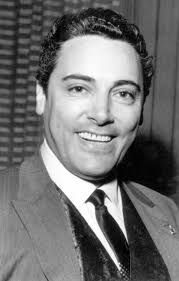
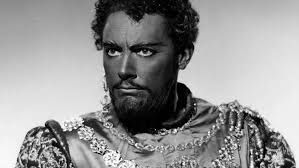
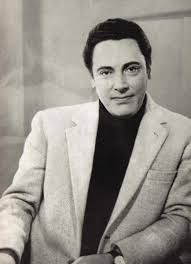
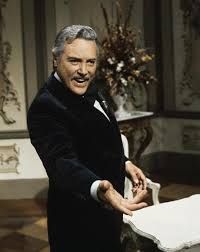
Mario Del Monaco was an Italian tenor.
He is considered one of the most representative and popular tenors of the fifties and sixties.
In addition to his frequent presence at La Scala and in other major Italian theaters (with a particular affection for Florence), he appeared regularly at the Metropolitan in New York from 1950 to 59 and was the first post-war Italian singer to perform at the Bol'šoj Theater in Moscow, where the fanaticism aroused by his interpretations of Carmen and Pagliacci induced the Soviet authorities to confer on him the Order of Lenin, the highest honor of the state.
His singing was characterized by a predominantly declamatory phrasing and a dramatic impetus that exalted his vocal power and ringing, but also, thanks to the endless winds, and contrary to what the detractors say, from the research, although not always successful, of half voices and sometimes even pianissimi, as can be seen especially in live recordings. In particular Alfredo Kraus believed his technique very close to the Italian tradition of Beniamino Gigli and Enrico Caruso, attributing the particular vocality more to stylistic than technical reasons.
e is recognized as one of the greatest interpreters of Othello of the twentieth century and as an inevitable term of comparison for all subsequent interpreters. His was a dark and violent character, full of impetuous and often electrifying drama. In addition to numerous live recordings, he left two official recordings of this work: the first of 1954 and that of 1961, under the direction of Herbert von Karajan, in which the interpretation appears more varied and nuanced.
Del Monaco frequently devoted himself to pop music and in 1975 a world-famous LP was born, containing in particular, in addition to classic songs of the Neapolitan song, the unpublished song Un amore così grande that it was very successful and was taken up by numerous artists in following years.