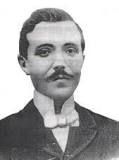
Vincenzo Russo was an Italian lyricist and poet.
On the death of his father, he found himself in a position to contribute to the family budget, and therefore embarked on the profession of shoemaker, although he already cultivated artistic propensities at the time. His activity as a poet, however, did not have a real beginning except until the meeting with Eduardo Di Capua, author of songs already famous for having composed 'O sole mio. The friendship between the two soon bore fruit, and in particular the song Maria Marì, which soon became a worldwide success.
On December 31, 1899 Vincenzo was in bed sick, and the next day his friend Eduardo went to see him, communicating that they had received an advance from the publisher Bideri to be divided. Convinced to go out, Di Capua led Russo to the Salone Margherita, where Armando Gill performed. It was at the exit of the theater that Russo gave Di Capua the verses of I 'te vurria vasà, perhaps his best known song and one of the milestones of the Neapolitan song. Only twenty-four hours later Di Capua had completed the composition of the music, which Russo liked immediately. Presented the song in the competition of La tavola rotonda, they brought back a disappointing second prize to be shared with three other songs. The scarce proceeds served Russo to buy drugs.
It is common opinion among historians of the Neapolitan song that I 'te vurria vasà, as well as many of the songs composed by Russo, were inspired by the secret and impossible love for Enrichetta Marchese, daughter of a jeweler. The difference in social class, despite Russo's love being paid, never made a happy ending possible.