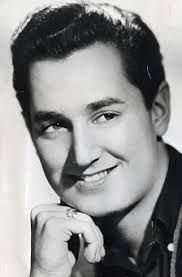
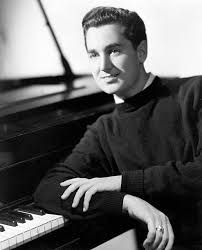
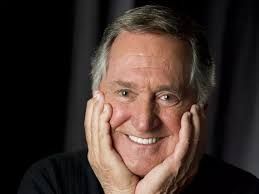
Neil Sedaka is an American pop singer, pianist, composer and record producer. Since his music career began in 1957 as a short-lived founding member of the Tokens, he has sold millions of records as an artist and has written or co-written over 500 songs for himself and others, collaborating mostly with lyricists Howard Greenfield and Phil Cody.
His first single for RCA Victor, "The Diary", was inspired by Connie Francis, one of Sedaka and Greenfield's most important clients, while the three were taking a temporary break during their idea-making for a new song. Francis was writing in her diary, Sedaka asked if he could read it, and Connie said no. After Little Anthony and the Imperials passed on the song, Sedaka recorded it himself, and his debut single hit the Top 15 on the Billboard Hot 100, peaking at No. 14 in 1958.
Sedaka then bought the three biggest hit singles of the time and listened to them repeatedly, studying the song structure, chord progressions, lyrics and harmonies before writing his next songs. "Oh! Carol" delivered Sedaka his first domestic Top 10 hit, reaching No. 9 on the Hot 100 in 1959 and going to No. 1 on the Italian pop charts in 1960, giving Sedaka his first No. 1 ranking. In the UK, the song spent a total of 17 weeks in the top 40, peaking at No. 3 (4 weeks). In addition, the B-side, "One Way Ticket", reached No. 1 on the pop charts in Japan. Sedaka had dated Carole King when he was still at high school, which gave him the idea to use her name in the song. Gerry Goffin – King's husband – took the tune, and wrote the playful response "Oh! Neil", which King recorded and released as an unsuccessful single the same year. Thus, this was the only time the melody of the song was used by a popular artist and a future sensation around the same time.
After establishing himself in 1958, Sedaka wrote many more hits from 1960 to 1962. His flow of Top 30 hits during this period included: "Stairway to Heaven" (No. 9, 1960); "You Mean Everything to Me" (No. 17, 1960); "Run, Samson, Run" (No. 27, 1960); "Calendar Girl" (No. 4, 1961; also reached No. 1 on the Japanese and Canadian pop charts); "Little Devil" (No. 11, 1961); "Happy Birthday Sweet Sixteen" (No. 6, 1961); his signature song, "Breaking Up Is Hard To Do" (No. 1, two weeks: August 11 and 18, 1962); and "Next Door to an Angel" (No. 5, 1962). Singles not making the Top 30 during this period included "Sweet Little You" (No. 59, 1961) and "King of Clowns" (No. 45, 1962). RCA Victor issued four LPs of his works in the United States and Great Britain during this period, and also produced Scopitone and Cinebox videos of "Calendar Girl" in 1961, "Breaking Up Is Hard To Do" in 1962, and "The Dreamer" in 1963. (His second LP was an album mostly of old standards.) He made regular appearances on such TV programs as American Bandstand and Shindig! during this period.