| Notes | CMI Series I (1979)
Musical sampler was introduced.
Price: ~£18,000[2]
CPUs: Dual Motorola 6800
Storage: Two 8" floppy drives
Memory: 16 kB per voice, System: 64 kB, Video: 16 kB (512x256 pixels)
Voices: 8 voices of polyphony
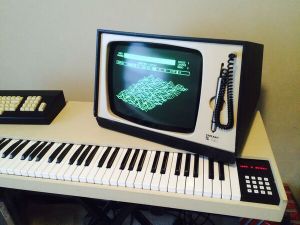
Synthesis: waveform drawing via lightpen; dynamic harmonic control, waveform editing
Sampling: 8 bits at 16 kHz (mono)
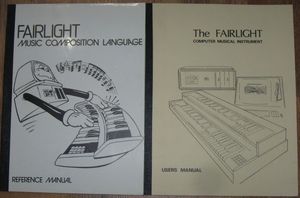
Sequencer: Basic keyboard sequencer, Musical Composition Language (MCL),
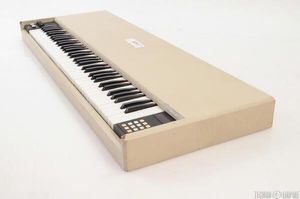
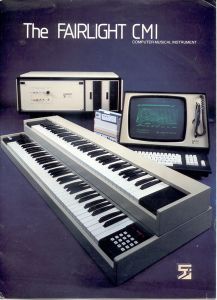
Keyboard: 73 note unweighted velocity sensitive + slave keyboard
CMI Series II (1980)
Price: ~£25,000
CPUs: Dual Motorola 6800
Storage: Two 8" floppy drives
Memory: 16 kB per voice, System: 64 kB, Video: 16 kB (512x256 pixels)
Voices: 8 voices of polyphony
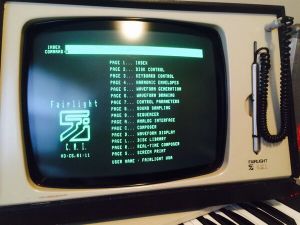
Synthesis: dynamic harmonic control (Page 4); waveform generating (Page 5); waveform drawing via lightpen (Page 6)
Sampling: 8 bits at 2100 Hz to 30.2 kHz (mono) (Page 8)
Sequencer: Basic keyboard sequencer (Page 9), Musical Composition Language (MCL, Page C), Realtime Composer (Page R)
Keyboard: 73 note unweighted velocity sensitive + slave keyboard
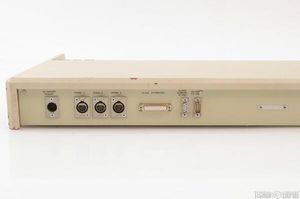
I/O: No MIDI, optional CV/Gate interface (Page A)
CMI Series IIx (1983)
Price: ~£27,000
CPUs: Dual Motorola 6809
Storage: Two 8" floppy drives
Memory: 16 kB per voice, System: 256 kB, Video: 16 kB (512x256 pixels)
Voices: 8 voices of polyphony
Synthesis: waveform drawing via lightpen; dynamic harmonic control; waveform editing; FFT (additive resynthesis)
Sampling: 8 bits at 2100 Hz to 30.2 kHz (mono) (Page 8)
Sequencer: Page R, Basic keyboard sequencer, Musical Composition Language (MCL)
Keyboard: 73 note unweighted velocity sensitive + slave keyboard
I/O: MIDI, SMPTE
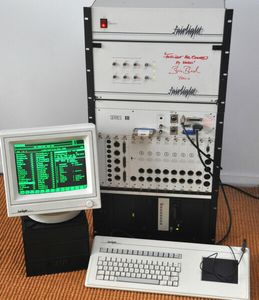
CMI Series III (1985)
Price: £40,000[3] or £60,000[2]
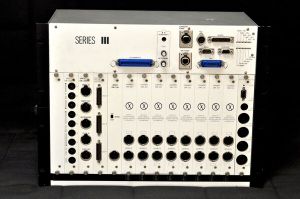
CPUs: Dual Motorola 6809 CPUs, and one 6809 CPU for each voice card, one Motorola 68000 (to 68020) for waveform processor card
Storage: Hard drive and Tape DC600 Streamer (ESDI, SCSI), one 8" floppy drive
Memory: 14 MB, expandable to 32 MB and maximum 64 MB on last hard revision (RAM RAM disk), System: 356 kB
Voices: 16 voices of polyphony (expandable)
Synthesis: waveform drawing via graphics tablet; waveform editing; FFT (additive resynthesis)
Sampling: 16 bits at 100 kHz (mono) or 50 kHz (stereo)
Sequencer: CAPS (Composer, Arranger, Performer Sequencer), 80 track polyphonic, Musical Composition Language (MCL),
Keyboard: 73 note unweighted velocity sensitive (MIDI compatible)
I/O: MIDI, SMPTE |