

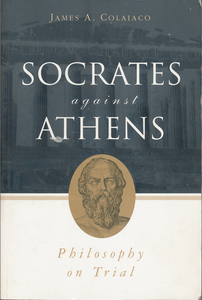
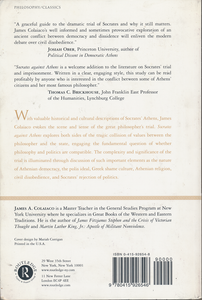

Socrates against Athens: Philosophy on Trial
| Format | Trade Paperback |
| Language | English |
| Copyright | 2001 |
Read
| Cover/Jacket Design by | Mariah Corrigan |
| Imprint | Routledge |
| Publisher | Taylor & Francis Group |
| About/Subject | Socrates |
| Format | Trade Paperback |
| Language | English |
| Location | New York and London |
| Copyright | 2001 |
| Pages / Font | 266 pages |
| ISBN 10 | 0-415-92654-8 |
| Barcode | 9780415926546 |
| EAN 5 | 90000 |
| Chapters | Acknowledgments
1. Introduction: A Tragic Confrontation
2. Setting the Stage for the Trial
Preliminaries
Historicity of the Apology
3. Socrates and Rhetoric
Athens—City of Speech
Socrates' Opening Remarks: Dismantling Forensic Rhetoric
4. Socrates Confronts His Old Accusers
Socrates and Aristophanes' Clouds
Socrates Denies He Is a Teacher of Natural Science
Socrates Denies He is a Sophist
5. Socrates' Radical Philosophic Mission
The Delphic Oracle
Socrates Examines the Politicians, Poets, and Craftsmen
The Mask of Ignorance
Solving the Riddle of the Oracle
6. The Athenian Polis Ideal
The Funeral Oration of Pericles: Apotheosis of the Polis
Homeric Shame Culture
Democracy Appropriates Homer
The Polis and the Individual
7. Socrates Confronts His Present Accusers: The Interrogation of Meletus
Corrupting the Young
The Polis as Teacher
Athenian Polis Religion
Socrates and Impiety
8. Socrates Brings the Philosophic Mission into the Court
Death Bears No Sting
Caring for One's Soul
Stepping Up the Offensive
The Gadfly
9. The Politics of an Unpolitical Man
A Private Rather Than a Public Station
Socrates' Divine Voice
Defender of Justice
10. The Trial Concludes: Socrates Condemned
The Corruption Charge Revisited
Rejecting an Appeal for Sympathy
Proposing a Counterpenalty
Truth Fails to Persuade
Parting Words to Enemies
Parting Words to Friends
11. Socrates and Civil Disobedience: The Crito
Socrates and Antigone
Socrates Dismisses the Shame Culture
Justice and the Soul
Socrates Argues for the Laws
The Skillful Ironist
Fulfilling the Will of a Benevolent God
12. Conclusion: A Conflict Unresolved
Notes
Selected Bibliography
Index Acknowledgments
1. Introduction: A Tragic Confrontation
2. Setting the Stage for the Trial
Preliminaries
Historicity of the Apology
3. Socrates and Rhetoric
Athens—City of Speech
Socrates' Opening Remarks: Dismantling Forensic Rhetoric
4. Socrates Confronts His Old Accusers
Socrates and Aristophanes' Clouds
Socrates Denies He Is a Teacher of Natural Science
Socrates Denies He is a Sophist
5. Socrates' Radical Philosophic Mission
The Delphic Oracle
Socrates Examines the Politicians, Poets, and Craftsmen
The Mask of Ignorance
Solving the Riddle of the Oracle
6. The Athenian Polis Ideal
The Funeral Oration of Pericles: Apotheosis of the Polis
Homeric Shame Culture
Democracy Appropriates Homer
The Polis and the Individual
7. Socrates Confronts His Present Accusers: The Interrogation of Meletus
Corrupting the Young
The Polis as Teacher
Athenian Polis Religion
Socrates and Impiety
8. Socrates Brings the Philosophic Mission into the Court
Death Bears No Sting
Caring for One's Soul
Stepping Up the Offensive
The Gadfly
9. The Politics of an Unpolitical Man
A Private Rather Than a Public Station
Socrates' Divine Voice
Defender of Justice
10. The Trial Concludes: Socrates Condemned
The Corruption Charge Revisited
Rejecting an Appeal for Sympathy
Proposing a Counterpenalty
Truth Fails to Persuade
Parting Words to Enemies
Parting Words to Friends
11. Socrates and Civil Disobedience: The Crito
Socrates and Antigone
Socrates Dismisses the Shame Culture
Justice and the Soul
Socrates Argues for the Laws
The Skillful Ironist
Fulfilling the Will of a Benevolent God
12. Conclusion: A Conflict Unresolved
Notes
Selected Bibliography
Index Show all ▾ |
| Notes | Printed in the U.S.A. |
Added by auboisdormant